Spring is the best time of year for medicinal foraging. The plants are young, vigorous, and packed with the compounds that gave them their traditional reputations, and the bug pressure is low enough that you can spend an afternoon in the woods without being eaten alive. Between roughly April and May in most temperate regions, the same fifteen or so medicinal plants emerge in predictable succession, and anyone willing to learn their identifying features can build a meaningful home apothecary from things growing wild within a few miles of home.
This guide covers fifteen of the most useful and beginner-friendly spring medicinal plants, with identification cues, traditional and evidence-supported uses, and honest notes about the ones with serious cautions. It is not a substitute for hands-on training — please take a local foraging class before wildcrafting for the first time — but it’s a reasonable starting list to learn and watch for.
Key Takeaways
- Spring is peak season for most leafy medicinal plants — compounds are strongest in young growth.
- Dandelion, nettle, violet, chickweed, cleavers, and plantain are the safest starter plants.
- Always harvest from clean sites — no roadsides, no treated lawns, no downstream of industrial or conventional farms.
- Learn 3–5 plants well before adding more. Deep knowledge of a few beats shallow familiarity with many.
- Many plants have toxic lookalikes. When in doubt, do not harvest.
Foraging Ethics and Safety
Three rules that matter more than any individual plant ID:
- 100% identification certainty. Never consume a plant you are not completely confident about. “I think this is X” is not enough. Cross-reference multiple sources, learn the toxic lookalikes, ideally get it confirmed by an experienced forager before eating.
- Clean harvest sites. Avoid roadsides (heavy metal accumulation, exhaust), treated lawns (pesticides), areas downstream from conventional farms (runoff), industrial sites, and near buildings with old lead paint. Public parks often use herbicides — ask before harvesting. Your own yard, a neighbor’s untreated yard, a friend’s rural property, or a wild natural area are the safest.
- Sustainable harvesting. Take no more than 1/3 of what’s present in any given patch. Leave the biggest and strongest plants to reproduce. Rotate harvesting areas. Never harvest rare or at-risk species (goldenseal, wild ginseng, ramps in many eastern forests are all under pressure — know your local plants before wildcrafting them). Ramps safety note: if you do pursue ramps (Allium tricoccum), be aware of two dangerous lookalikes — lily of the valley (Convallaria majalis), which contains fatal cardiac glycosides, and false hellebore (Veratrum viride), which contains toxic steroidal alkaloids. Ramps smell strongly of onion/garlic when any part is crushed; lily of the valley and false hellebore do not. False hellebore leaves are heavily pleated/ribbed and spiral up the stem; ramps leaves are smooth and emerge basally from the bulb. If the leaf in your hand does not smell of onion, it is not a ramp.
The 15 Spring Medicinal Plants

1. Dandelion (Taraxacum officinale)

ID: Everyone knows dandelion. Deeply-lobed leaves in a basal rosette, hollow stems with milky sap, yellow composite flowers, characteristic puffball seed heads. No toxic lookalikes common in North America. Young cat’s ear and hawkweed are similar but not dangerous.
Uses: Young leaves as a bitter salad green (liver/digestion support). Flowers for dandelion wine or tea. Roots (harvested in fall, but spring also workable) for dandelion “coffee” or tincture; traditional diuretic and hepatic tonic.
Harvest: Young leaves in early spring before the plant flowers (older leaves become intensely bitter). Flowers at peak bloom. Roots from larger, older plants.
2. Stinging Nettle (Urtica dioica)
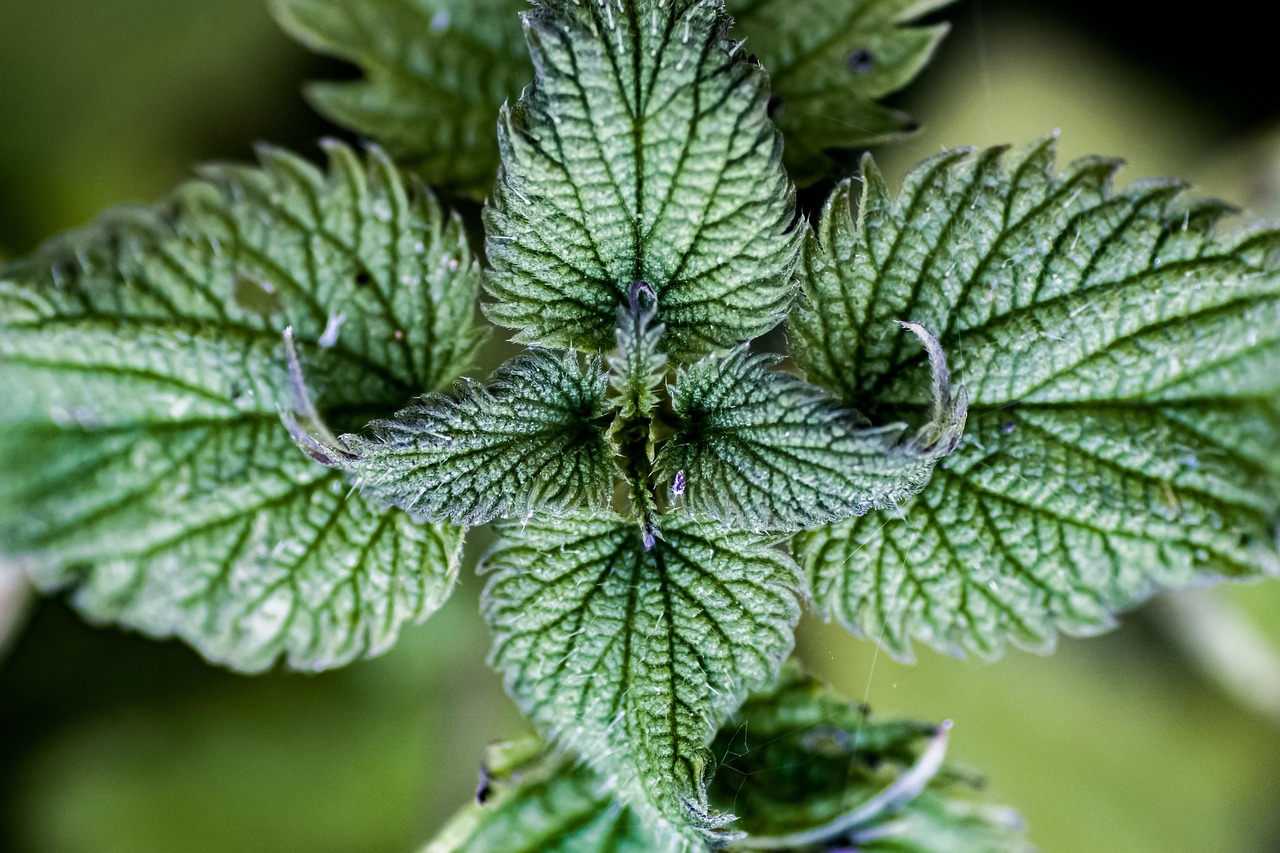
ID: Tall herbaceous plant with opposite, serrated, heart-shaped leaves. Fine stinging hairs on leaves and stems. Grows in moist, rich soil — often around old homesteads and stream edges.
Uses: Highly nutritious cooked green, traditional tonic tea, research-supported for allergic rhinitis and BPH. See our nettle benefits guide.
Harvest: Young tops (top 4–6 inches) in early spring. Grip firmly from below to minimize sting, or wear gloves. Blanch or dry before handling ungloved.
3. Wild Violet (Viola sororia, V. odorata)

ID: Low-growing with heart-shaped leaves and distinctive 5-petaled purple (or white) flowers, often found in shaded lawns and woodland edges. No dangerous lookalikes for the common species.
Uses: Young leaves and flowers are edible and nutritious. Traditional uses include respiratory support and as a gentle lymphatic herb. Violet syrup is a traditional preparation.
Harvest: Leaves and flowers throughout spring. The flowers are brief — catch them.
4. Cleavers (Galium aparine)

ID: Sprawling, sticky plant with whorled leaves in groups of 6–8 and tiny white flowers. Famously “sticky” — clings to clothes and skin via tiny hooked hairs. Sometimes called “goosegrass” or “catchweed.”
Uses: Traditional lymphatic tonic, used as a spring tonic tea or juice. Harvest before flowering for best potency.
Harvest: Early to mid-spring, before the plant flowers and becomes tough.
5. Chickweed (Stellaria media)

ID: Low, sprawling plant with small oval leaves, tiny white star-shaped 5-petaled flowers, and a single line of hairs running down one side of the stem (a useful ID feature). Commonly found in garden beds and moist cool areas.
Uses: Mild edible green, traditional cooling herb for skin irritation, cooked into salves for itch. Often included in spring tonic blends.
Harvest: Early spring, before it gets leggy in warm weather.
6. Plantain (Plantago major, P. lanceolata)
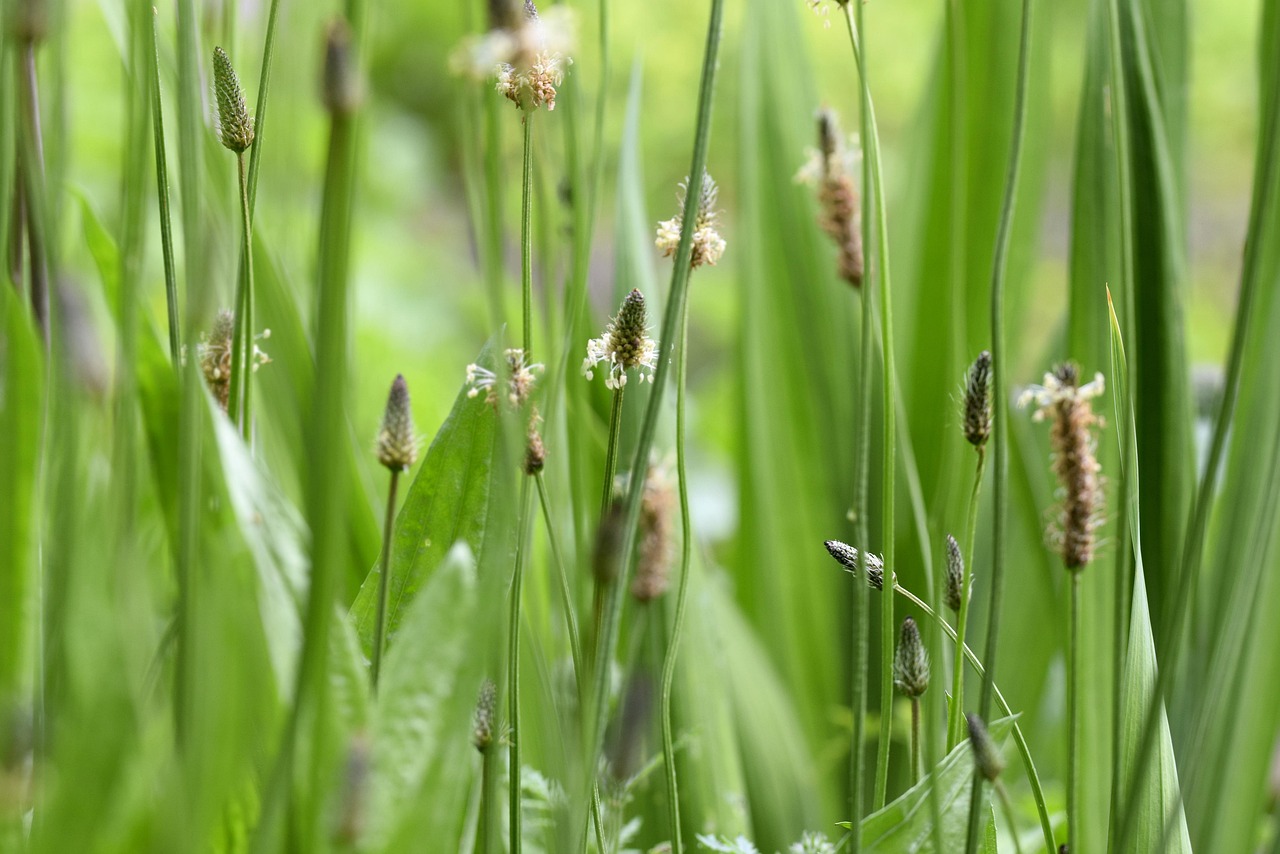
ID: Broad-leaved plantain has oval ribbed leaves in a basal rosette with parallel veins. Narrow-leaved plantain (ribwort) has longer, narrower leaves. Both have characteristic flower stalks with small green-brown flowers. No dangerous lookalikes.
Uses: Traditional “forager’s first aid” — crushed fresh leaves on insect stings, minor cuts, splinters. Dried leaves for tincture or infused oil. One of the most useful topical herbs you’ll find for free.
Harvest: Young leaves throughout spring and summer.
7. Yellow Dock (Rumex crispus)

ID: Long, narrow leaves with wavy/curly edges (hence “crispus”). Can reach 3 feet tall. The root — which is the medicinal part — is dark yellow when cut open, distinguishing it from similar Rumex species.
Uses: Traditional iron-rich tonic, used for anemia support and as a mild laxative. The root is often included in spring tonic blends.
Harvest: Roots of larger plants; early spring before stalks bolt, or fall after seeding.
8. Burdock Root (Arctium minus, A. lappa)

ID: First-year rosettes have very large heart-shaped leaves with woolly undersides. Second-year plants bolt tall and produce the famous hooked seed burrs. Harvest only first-year roots — second-year roots are woody and depleted.
Uses: Traditional alterative (blood-cleansing herb) and skin tonic. The root is also edible as a vegetable (popular as “gobo” in Japanese cuisine).
Harvest: First-year roots in late fall of the first year or very early spring of the second year, before the plant bolts. Digging burdock root is hard work — bring a strong shovel.
9. Wild Garlic / Field Garlic (Allium vineale, A. canadense)

ID: Tube-shaped hollow leaves emerging in spring in grassy areas, with a strong, unmistakable onion/garlic smell when crushed. Critical: if the plant does not smell like onion or garlic, do not eat it — several toxic bulb species look similar but lack the smell (death camas, crow poison).
Uses: Culinary — mild garlic flavor in salads, soups, pesto, and eggs. Traditional cardiovascular and immune support from the Allium family compounds.
Harvest: Leaves and bulbs in spring; leaves regenerate if you leave the bulb.
10. Pine Needles (Pinus strobus, other white pines)

ID: White pine has needles in bundles of 5 — easy to remember (“w-h-i-t-e”). Other edible pines vary by region. Critical: avoid Norfolk Island pine (not actually a pine, ornamental, toxic), yew (flat needles, red berries, extremely toxic), and ponderosa pine (contains isocupressic acid, can cause miscarriage).
Uses: Vitamin C-rich tea, traditional respiratory and cold support.
Harvest: New growth tips in spring are tenderest.
11. Spruce Tips (Picea spp.)

ID: Bright green, soft new growth at the tip of branches on spruce trees in late spring — when you can pinch them off easily and they taste like lemon-citrus-pine. Critical lookalike: do not confuse spruce with yew (Taxus spp.) — yew is extremely toxic (all parts except the red aril flesh contain taxine alkaloids that cause cardiac arrest). Yew needles are flat, soft, dark green above with two pale lines below, and arranged in two flat rows along the stem. Spruce needles are square in cross-section (roll between fingers), attach to the twig on small woody pegs, and are arranged all around the stem.
Uses: Vitamin C, traditional respiratory and tonic uses, culinary use in syrups, infused honey, or quick pickles.
Harvest: New growth during the brief 2–3 week window in late spring. Take only a few tips per tree.
12. Cottonwood Buds (Populus spp.)

ID: Sticky, fragrant buds on cottonwood, poplar, or balm of Gilead trees in early spring before they open. The resin has a distinctive balsamic-sweet smell.
Uses: Traditional “balm of Gilead” — infused in oil for a topical muscle rub and wound salve. The salicin content provides mild anti-inflammatory activity.
Harvest: Early spring, picking only a few sticky unopened buds from any one tree.
13. Birch (Betula spp.) — Sap and Inner Bark
ID: White birch is distinctive. Yellow birch, black birch, and river birch are also edible.
Uses: Tap sap in early spring (like maple, but less sweet) for a traditional mineral-rich tonic drink. Inner bark of black birch and yellow birch has wintergreen flavor and traditional uses. Birch polypore fungus on birch trunks is a related traditional medicine.
Harvest: Sap for about 2 weeks in early spring. Do not strip bark — this kills trees.
14. Garlic Mustard (Alliaria petiolata)
ID: Invasive biennial with heart-shaped toothed leaves in the first year, white 4-petaled flowers in the second year. Crushed leaves smell like garlic and mustard — hence the name.
Uses: Edible, vitamin-rich, mild medicinal profile. Because it’s invasive in much of North America, harvest freely — you’re helping the ecosystem.
Harvest: Young leaves in spring of either year; flowering tops and immature seed pods also edible.
15. Red Clover (Trifolium pratense)
ID: Common field clover with three leaves (sometimes four) and pink-purple composite flower heads. Trifoliate leaves with the characteristic white chevron pattern.
Uses: Traditional alterative and lymphatic herb, mild hormonal effects from isoflavone content. Flowers commonly dried for tea or tincture.
Harvest: Flower heads when fully open in late spring and early summer.
Preservation

The best way to extend a short spring foraging season is to preserve what you harvest:
- Dry leaves and flowers for tea and tincture. Spread thinly on screens or paper towels in a warm, well-ventilated spot out of direct sun. Store in airtight jars away from light once fully dry.
- Tincture fresh plant material — particularly useful for plants whose compounds degrade with drying. See our tincture guide.
- Infuse into oils once fully dried — for salves and topical preparations. See our infused oils guide.
- Freeze young nettle, dandelion greens, and wild garlic for cooking later in the year.
- Make syrups, vinegars, and honey infusions for flavored preservation.
Starter Approach: Learn Three Plants Well
If you are new to foraging, the worst thing you can do is try to learn all fifteen of these at once. Pick three — I’d suggest dandelion, plantain, and nettle as the starter set — and learn them thoroughly. Walk the same patch every few days, watch them grow and change, harvest them, make things with them, read about their traditional uses. Spend a full spring season with just those three.
Next year, add three more. By the third year you’ll have a working knowledge of a dozen wild medicinal plants and the confidence to identify them in any condition. This is how traditional knowledge actually accumulates — depth before breadth.
The Bottom Line

Spring foraging for medicinal plants is one of the most rewarding practices in traditional herbalism. It connects you to the place you live, teaches observation skills that transfer to every other area of plant knowledge, and provides free, high-quality medicine for a home apothecary. Start with easy, safe plants in clean places, learn a few well before moving on, and always — always — confirm your identification with multiple sources and, ideally, a knowledgeable human before consuming anything.
See also: nettle benefits, 10 medicinal herbs every beginner should grow, herbal infused oils guide.
Safety Profile: Spring Foraging
The Three Rules Before Any Wild Plant Goes in Your Mouth
- 100% positive ID or don’t eat it. Consult at least three independent sources (field guide, local expert, photographic comparison). If there is any doubt, do not consume.
- Know the toxic lookalikes for every species you harvest. Each species in this guide has its lookalikes noted in the ID line — read before you go out, and refer to the Key Toxic Lookalikes table below.
- Test new foods on a small amount first. Even correctly identified wild plants can trigger individual allergic reactions.
General Contraindications for Wild Foraging
- Pregnancy and lactation
- Avoid foraged medicinal plants without clinician input. Established food-amount uses of culinary wild herbs (nettle tea, wild garlic or garlic mustard in cooking) are generally safer than medicinal tinctures. Pregnancy-specific cautions for species in this article: red clover (isoflavones — avoid medicinal doses in pregnancy and in hormone-sensitive conditions), cottonwood buds and birch (salicin — same precautions as aspirin; avoid in pregnancy, in children with viral illness due to Reye’s syndrome risk, and with anticoagulants), yellow dock (oxalates and anthraquinones — avoid in pregnancy, in kidney stone history, and at laxative doses long term), burdock (uterine-stimulant traditional caution — avoid medicinal doses in pregnancy).
- Drug interactions
- Nettle + diuretics or blood-pressure medications (additive). Dandelion root + lithium, diuretics, and potassium-sparing drugs (fluid and electrolyte shifts). Cottonwood buds / birch (salicin) + warfarin, aspirin, or other anticoagulants/antiplatelets — additive bleeding risk; also avoid if aspirin-allergic. Red clover + anticoagulants, hormone-sensitive conditions (breast cancer, endometriosis, fibroids), hormone therapy, and tamoxifen. Wild garlic / field garlic (Allium) + anticoagulants at medicinal doses.
- Harvest-location contaminants
- Avoid roadside plants (lead, cadmium, hydrocarbons). Avoid downstream-of-agriculture areas (herbicides, fertilizer runoff, atrazine). Avoid dog-walking parks (parasites, urine contamination on ground-level greens like chickweed, violet, dandelion). Avoid near old painted buildings (lead) and industrial sites.
- Allergies
- Asteraceae-family plants in this guide — dandelion, burdock — can cross-react in people with ragweed / composite-family allergy (roughly 5–10% of ragweed-sensitive individuals). Red clover may cross-react in people with legume (pea, peanut) allergies. Introduce any new wild food one at a time, in a small amount, 24–48 hours apart.
- Nettle stings
- Fresh nettle formic-acid stings are not dangerous for most people but can cause a severe reaction in a minority. Wear gloves on first handling. Cooking, drying, blanching, or tincturing inactivates the sting.
Key Toxic Lookalikes
| Safe species in this guide | Toxic lookalike | How to tell them apart |
|---|---|---|
| Ramps (Allium tricoccum) — mentioned in the Ethics section | Lily of the valley (Convallaria majalis) — fatal cardiac glycosides | Ramps smell strongly of onion/garlic when leaves are crushed. Lily of the valley has no smell and has stiffer, more upright parallel-veined leaves. |
| Ramps (Allium tricoccum) | False hellebore (Veratrum viride) — toxic steroidal alkaloids | False hellebore leaves are heavily pleated/ribbed and spiral around an upright stem. Ramps leaves are smooth, unribbed, and emerge basally from the bulb. No onion smell on false hellebore. |
| Wild garlic / field garlic (Allium vineale, A. canadense) | Death camas (Zigadenus / Toxicoscordion spp.) and crow poison (Nothoscordum bivalve) — fatal alkaloids | All true Allium species smell unmistakably of onion or garlic when crushed. Death camas and crow poison do not. No onion smell = do not eat. |
| Pine needles (Pinus strobus and other edible pines) | Yew (Taxus spp.) — extremely toxic taxine alkaloids; cardiac arrest | Yew has flat, soft, dark green needles with pale underside bands, arranged in two flat rows. True pines have needles bundled in groups of 2, 3, or 5 at the twig, never flat in a single plane. |
| Pine needles | Norfolk Island pine (Araucaria heterophylla) — ornamental, toxic if ingested | Not a true pine. Symmetrical tiered branches, soft scale-like needles arranged spirally. Common as a houseplant and in warm coastal landscaping. |
| Pine needles (for tea) | Ponderosa pine (Pinus ponderosa) — isocupressic acid; documented to cause miscarriage in livestock and considered unsafe in pregnancy | A true pine (needles in bundles of 3, long, yellow-green) — avoid for tea use especially in pregnancy. White pine (P. strobus, bundles of 5) is the traditional choice. |
| Spruce tips (Picea spp.) | Yew (Taxus spp.) — as above | Spruce needles are square in cross-section and roll between your fingers; they attach on small woody pegs and point out all around the stem. Yew needles are flat, soft, and lie in two flat rows. |
| Burdock first-year root (Arctium spp.) | Common foxglove (Digitalis purpurea) and, less commonly, belladonna — cardiac and anticholinergic toxicity | Burdock first-year rosette leaves have woolly/felted undersides and a distinct long petiole. Foxglove rosette leaves are finely downy on both sides and lack burdock’s woolly underside. If in any doubt, do not dig the root. |
| Yellow dock (Rumex crispus) | Other Rumex species (not typically toxic, but not all are medicinal) | Yellow dock has wavy/curly leaf margins and an unmistakable bright yellow root cross-section — the key confirming feature before tincturing. |
Per-Species Quick Safety Notes
- Dandelion (Taraxacum officinale)
- No toxic lookalikes in North America. Cautions: Asteraceae cross-reactivity in ragweed allergy; avoid medicinal root doses in bile-duct obstruction or active gallstones; diuretic and lithium interaction.
- Stinging Nettle (Urtica dioica)
- No toxic lookalikes. Cautions: fresh sting; additive with diuretics and antihypertensives; discontinue before surgery.
- Wild Violet (Viola sororia, V. odorata)
- Common species have no dangerous lookalikes in typical lawn/woodland-edge habitat. Do not substitute unrelated “violets” (African violet, dogtooth violet) — different genus. Large medicinal doses can be emetic.
- Cleavers (Galium aparine)
- No toxic lookalikes. Generally safe as a spring tonic tea.
- Chickweed (Stellaria media)
- Can be confused with scarlet pimpernel (Anagallis arvensis) — mildly toxic, not fatal. Scarlet pimpernel has orange-red flowers and a square stem; chickweed has white star-shaped flowers and a round stem with a single line of hairs.
- Plantain (Plantago major, P. lanceolata)
- No toxic lookalikes. Broadly safe; rare allergic contact dermatitis.
- Yellow Dock (Rumex crispus)
- Oxalates — avoid in kidney stone history, gout, and pregnancy at medicinal doses. Anthraquinone laxative effect at higher doses; do not use long-term.
- Burdock (Arctium spp.)
- Dig only confirmed first-year rosettes. Possible confusion with foxglove and belladonna rosettes — see lookalikes table. Asteraceae cross-reactivity. Traditional uterine-stimulant caution in pregnancy.
- Wild / Field Garlic (Allium spp.)
- Death camas and crow poison lookalikes — no onion smell means do not eat. Anticoagulant interaction at medicinal doses.
- Pine (Pinus strobus, edible species)
- Avoid yew (fatal), Norfolk Island pine (ornamental, toxic), and ponderosa pine (miscarriage risk). Pine pollen and resin can cause contact reactions in sensitive individuals.
- Spruce Tips (Picea spp.)
- Distinguish from yew (see table). Take only a few tips per tree. Salicylate-sensitive individuals should start very small.
- Cottonwood Buds (Populus spp.)
- Contains salicin (aspirin-like). Avoid in pregnancy, in children with viral illness (Reye’s syndrome risk), with anticoagulants/antiplatelets, and in confirmed aspirin allergy.
- Birch (Betula spp.)
- Inner bark contains methyl salicylate — same salicylate cautions as cottonwood. Harvest sap without girdling the tree. Birch pollen allergy is common and can cross-react with birch sap.
- Garlic Mustard (Alliaria petiolata)
- No toxic lookalikes. Cyanogenic glycosides are present at low levels — eat in normal culinary amounts, not in concentrated medicinal doses.
- Red Clover (Trifolium pratense)
- Isoflavone (phytoestrogen) content. Avoid in pregnancy, hormone-sensitive cancers (breast, uterine, ovarian), endometriosis, fibroids, and with anticoagulants or hormone therapy. Legume-family cross-reactivity possible.
If You Suspect a Poisoning
Call Poison Control 1-800-222-1222 (US) immediately with the plant name if known. For symptoms beyond mild GI upset — especially cardiac (irregular pulse, fainting), neurological (weakness, seizures, confusion), or liver symptoms (jaundice, dark urine) — also call 911 or go to an ER. Do not wait for symptoms to progress. If possible, bring a sample of the plant with you.
References
- Thayer S. “The Forager’s Harvest: A Guide to Identifying, Harvesting, and Preparing Edible Wild Plants.” Forager’s Harvest Press, 2006.
- Kallas J. “Edible Wild Plants: Wild Foods From Dirt to Plate.” Gibbs Smith, 2010.
- USDA PLANTS Database. plants.usda.gov.
- Memorial Sloan Kettering Cancer Center. About Herbs monographs (individual plants).