Chamomile is the herb everyone thinks they know. Bedtime tea. A bag from the grocery store. Something grandmothers drank. What most people don’t know is that chamomile also has some of the strongest clinical evidence of any traditional herb for a condition conventional medicine has historically struggled with: generalized anxiety disorder.
In 2009, researchers at the University of Pennsylvania published a double-blind, placebo-controlled randomized trial of oral Matricaria recutita extract for patients with mild-to-moderate GAD. The finding: chamomile demonstrated “modest anxiolytic activity” (Amsterdam et al. 2009, PMC2995283). A follow-up 8-week trial from the same group reinforced the result. That is a real evidence base — not a folk claim, not a traditional-use assertion, an actual RCT.
This guide covers what the research shows, how to distinguish German from Roman chamomile (most people get this wrong), the apigenin mechanism, how to grow and use chamomile in multiple preparations, and what to watch out for in terms of allergies and interactions.
Key Takeaways
- German chamomile (Matricaria chamomilla) is the medicinal species. Roman chamomile (Chamaemelum nobile) is a different plant used primarily in essential oil form.
- A 2009 University of Pennsylvania RCT found chamomile extract effective for mild-to-moderate GAD at 1500 mg/day over 8 weeks.
- Apigenin, a flavonoid in chamomile, binds weakly to the benzodiazepine site of the GABA-A receptor — a plausible anxiolytic mechanism.
- Chamomile is safe and well tolerated at food and tea doses, with one exception: people with severe ragweed allergy may cross-react.
- Mild anticoagulant activity means caution with warfarin.
German vs Roman Chamomile: The Distinction Most Articles Miss
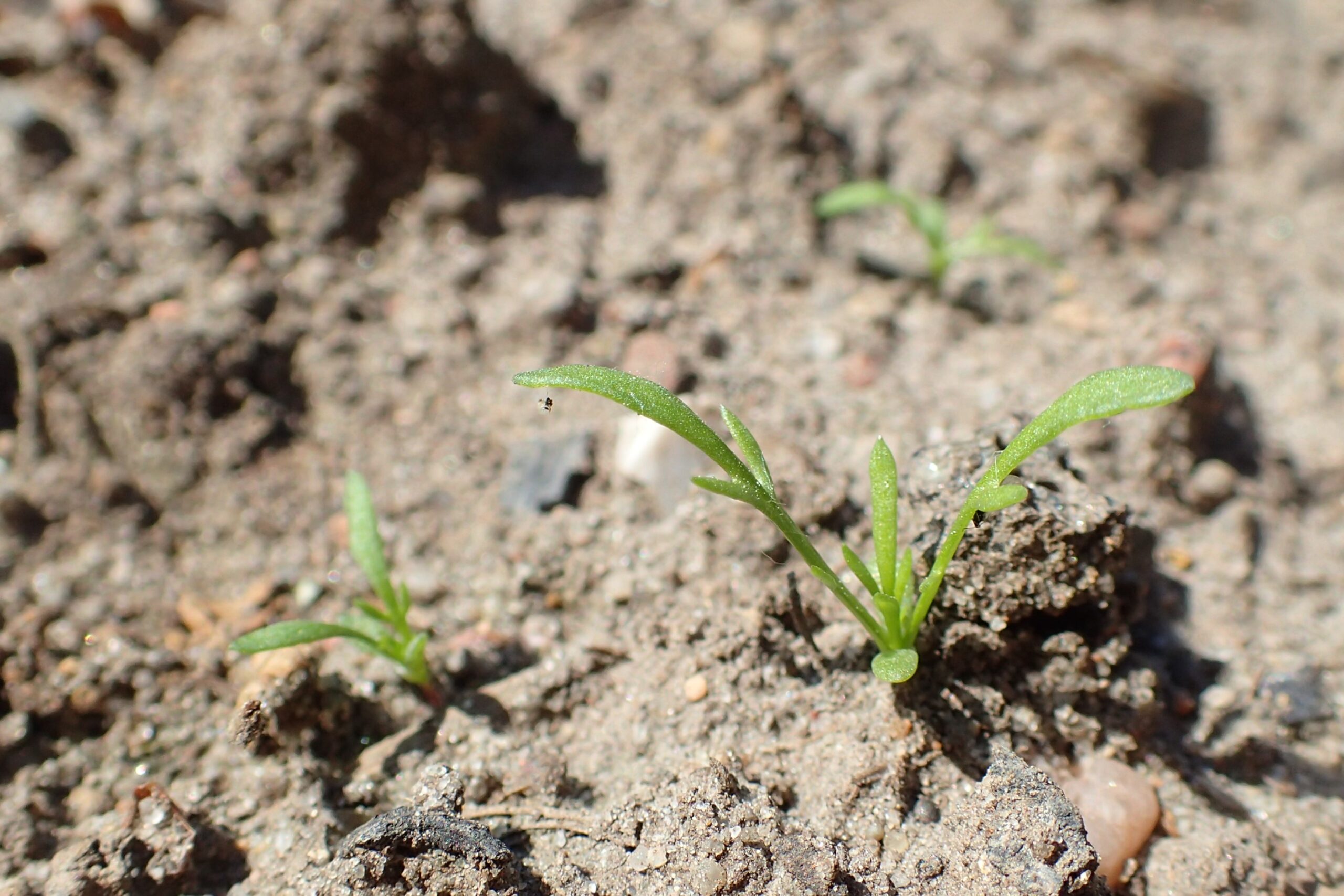

When the word “chamomile” appears on a tea bag, a supplement label, or a research paper, it can mean one of two different species:
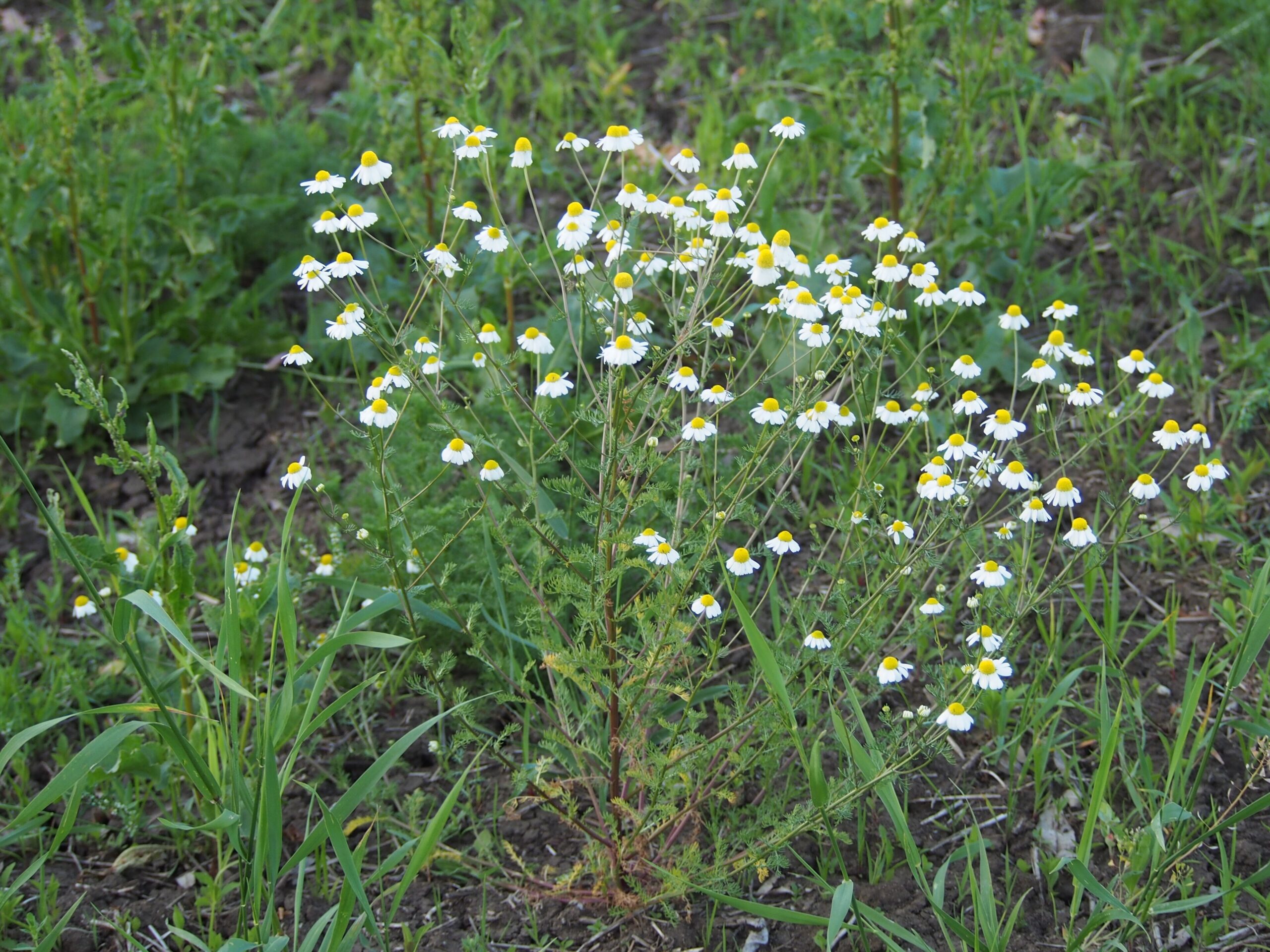
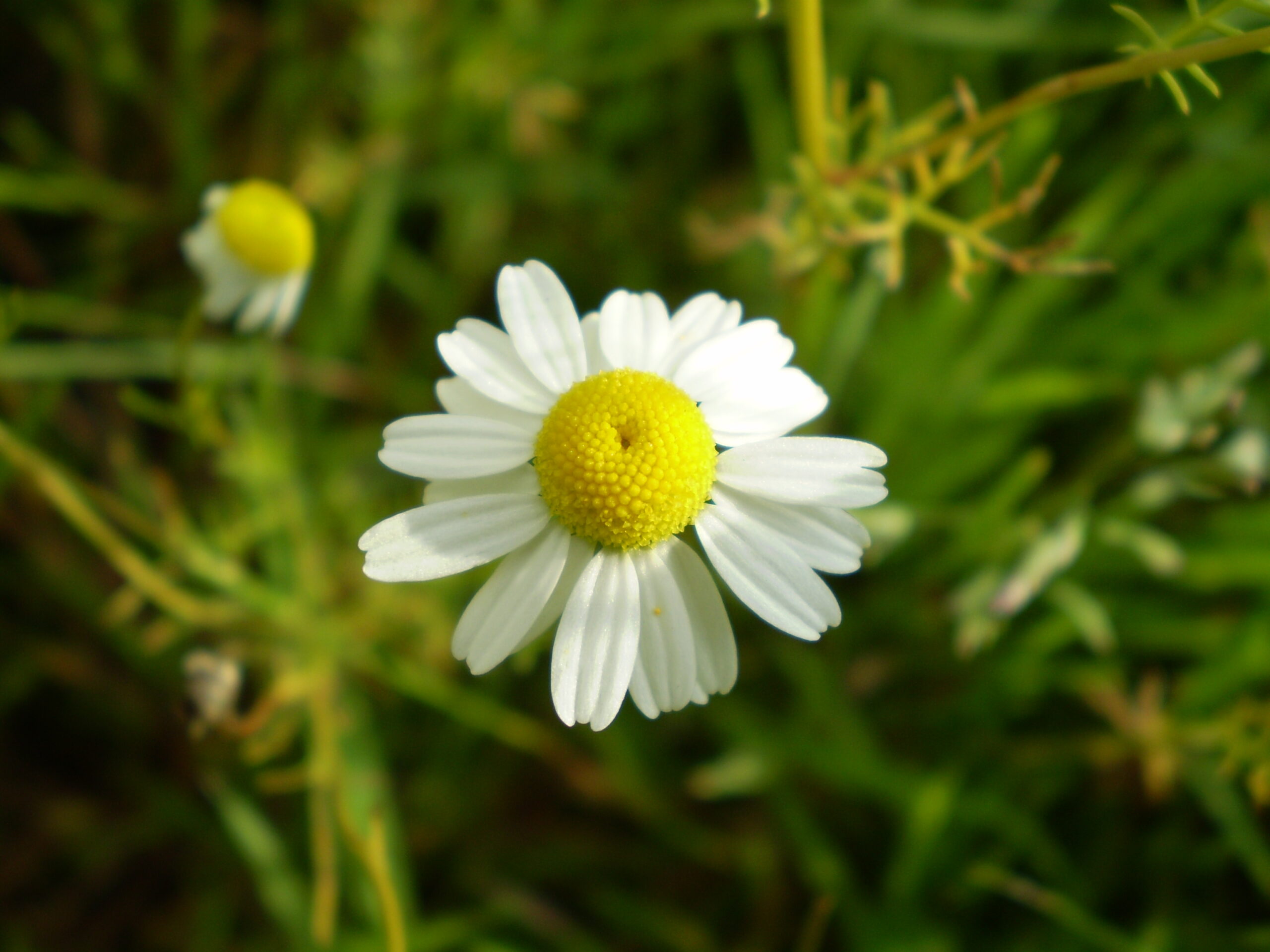
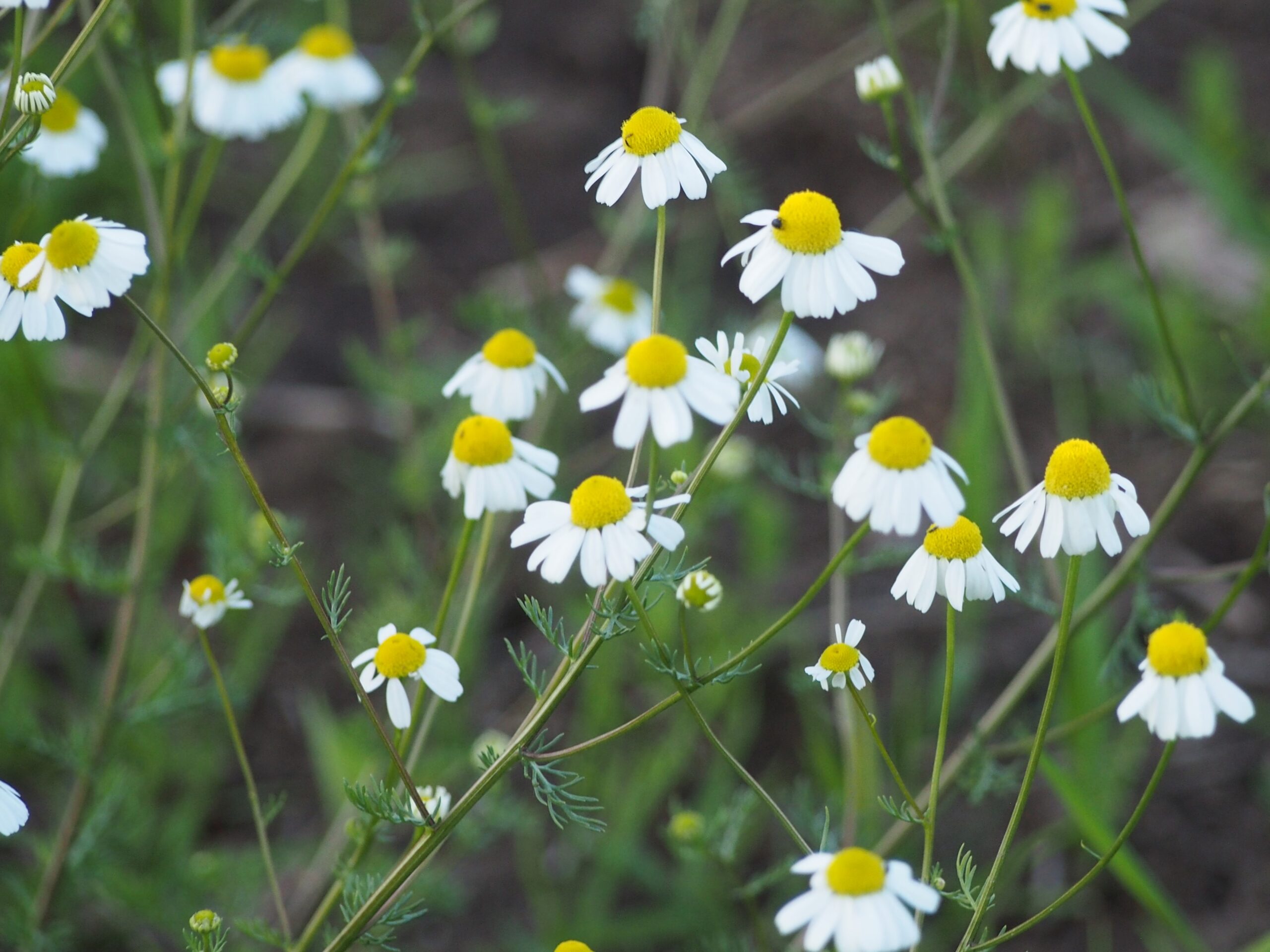
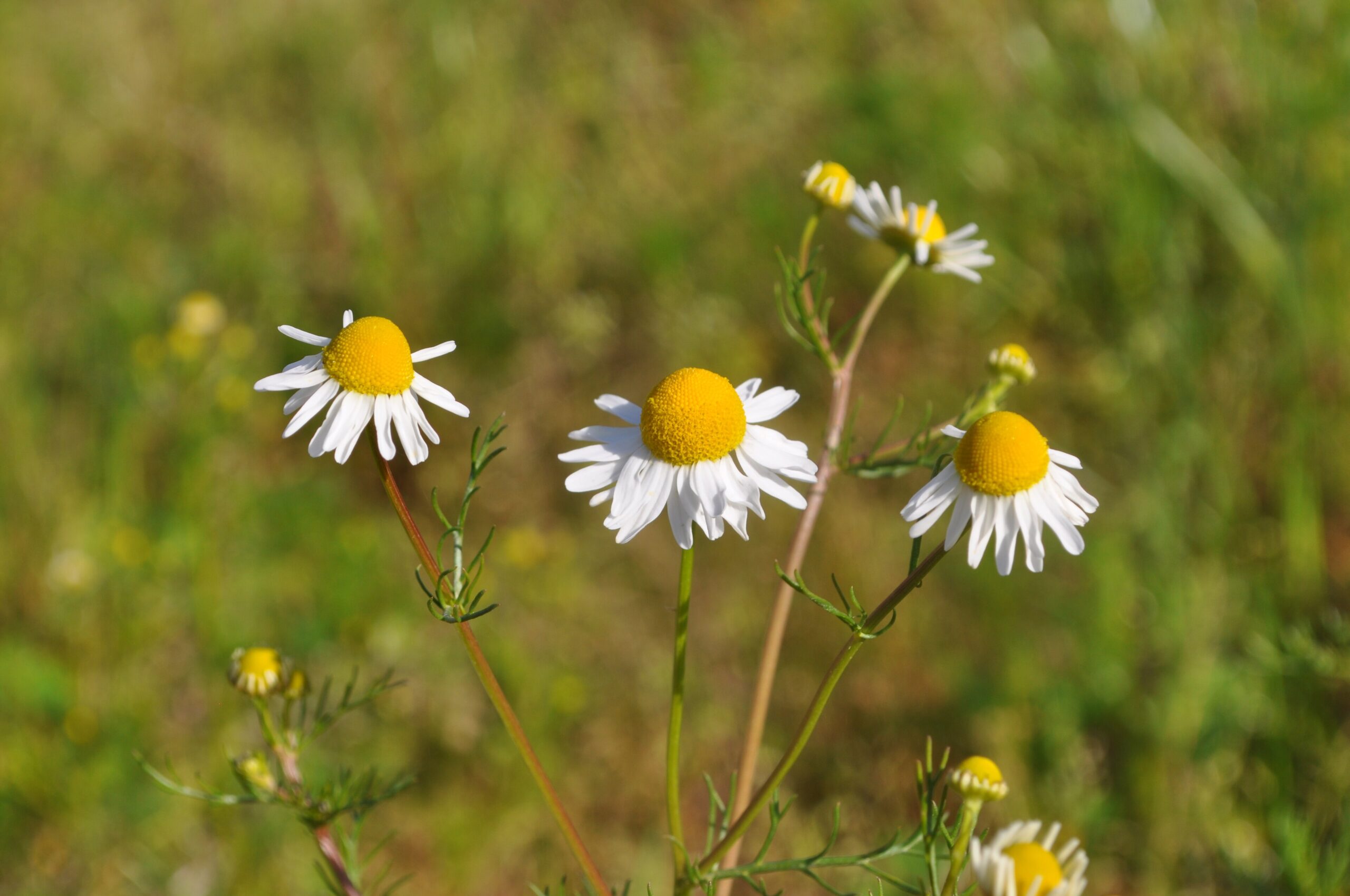
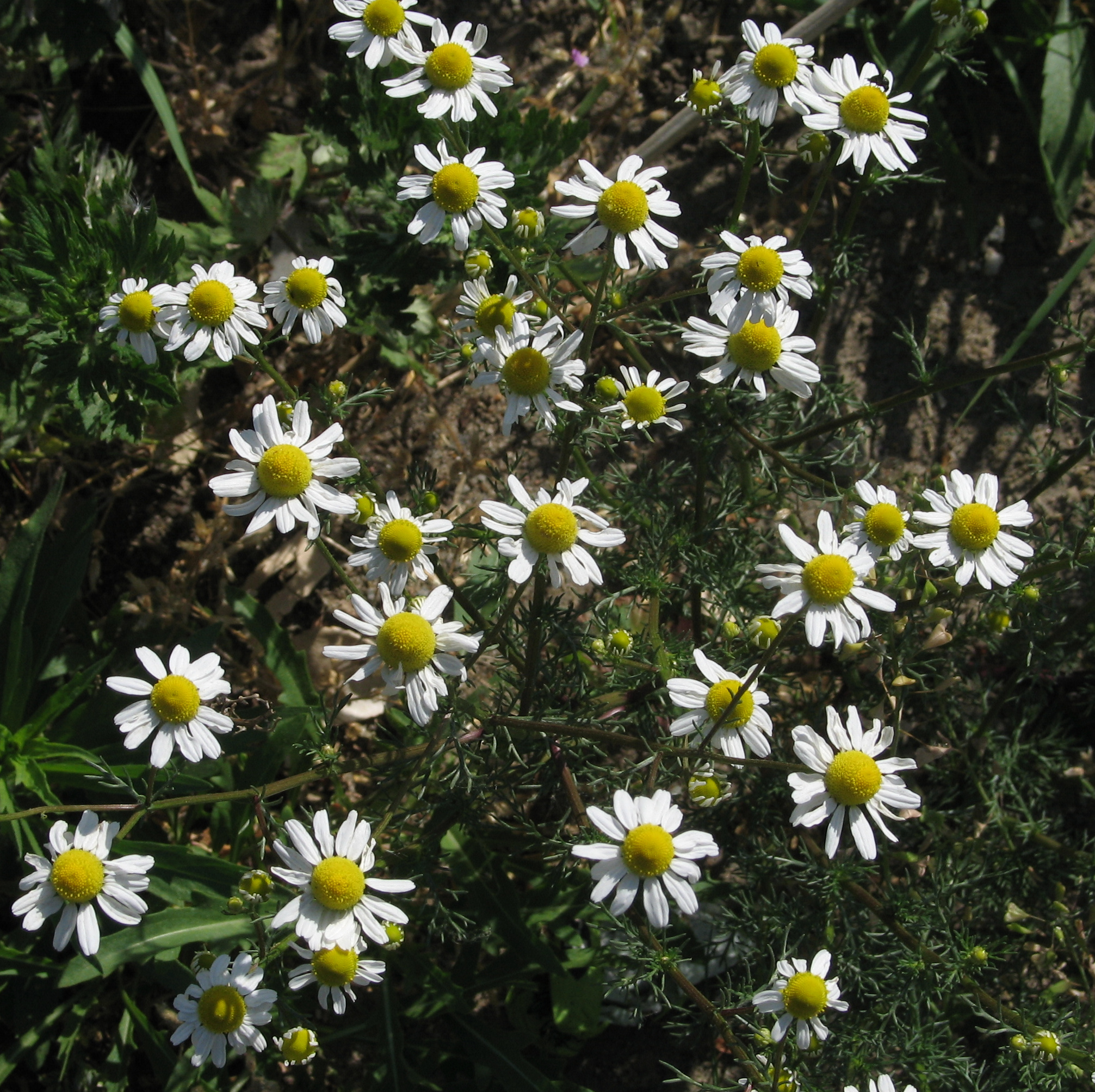
- German chamomile (Matricaria chamomilla, also called M. recutita) — an annual plant with hollow receptacles and a taller, bushier habit. The species used in essentially all clinical research and the one in most commercial teas.
- Roman chamomile (Chamaemelum nobile) — a low-growing perennial, once used extensively for lawns, with solid receptacles and a sharper, slightly more bitter flavor. Primarily used today as an essential oil in aromatherapy.
If an article says “chamomile for anxiety” or “chamomile for sleep,” it is almost certainly talking about German chamomile, and that is the species to grow, buy, and use internally. This guide covers German chamomile unless otherwise noted.
The Research on Chamomile for Anxiety

The 2009 Amsterdam RCT

Amsterdam and colleagues at the University of Pennsylvania published the first randomized, double-blind, placebo-controlled trial of oral chamomile for generalized anxiety disorder in the Journal of Clinical Psychopharmacology in 2009. Patients with mild-to-moderate GAD received either standardized Matricaria recutita extract or placebo. The finding was that chamomile “may have modest anxiolytic activity in patients with mild to moderate GAD” (PMC2995283).
The word “modest” matters. Chamomile is not going to replace a benzodiazepine or an SSRI for someone with severe anxiety — that’s not the claim, and anyone who frames it that way is overselling. What the research actually supports is a real, measurable reduction in anxiety symptoms among people with mild-to-moderate GAD, with a safety profile that is vastly better than any pharmaceutical alternative.
The 2012 follow-up and long-term use

A subsequent 8-week open-label and 26-week continuation trial from the same group examined longer-term chamomile use in GAD. The research group used standardized chamomile extract at 1500 mg/day (three 500 mg capsules), with significant reductions in GAD severity scores compared to placebo, and good tolerability over the longer treatment window.
This is, to my knowledge, the most robust clinical evidence base for any traditional herb used for anxiety — stronger than St. John’s wort for depression, stronger than valerian for sleep, stronger than kava for generalized anxiety (even before kava’s liver concerns).
Mechanism: Why Chamomile Might Actually Work
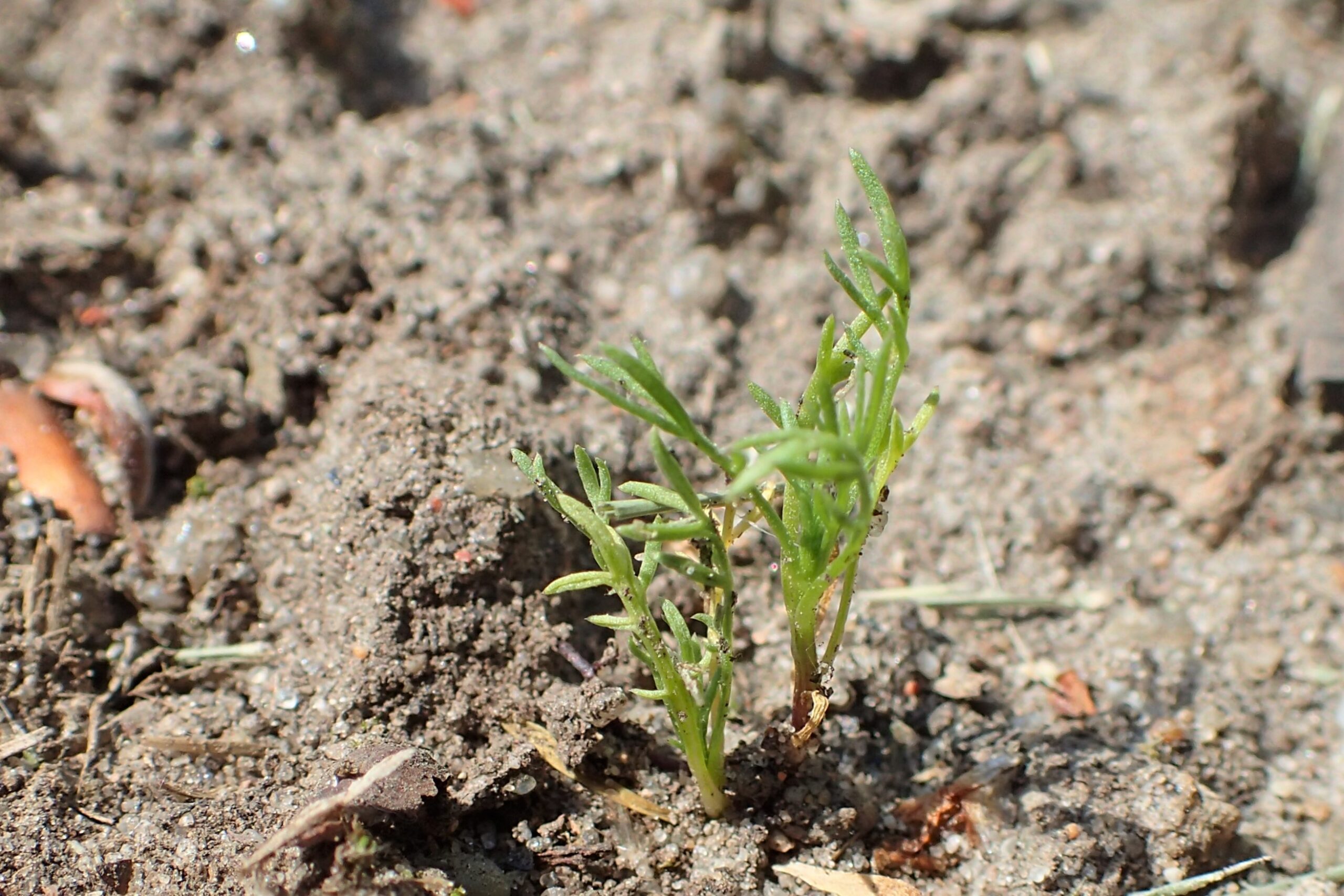

Chamomile contains at least a dozen bioactive compounds, but the most interesting one for its anxiolytic effects is apigenin, a flavonoid that binds — weakly — to the benzodiazepine site of the GABA-A receptor. GABA is the primary inhibitory neurotransmitter in the brain. When something binds to the benzodiazepine site and modulates GABA activity, it can produce calming, anti-anxiety, and mildly sedative effects. This is the same receptor system that drugs like diazepam (Valium) and alprazolam (Xanax) act on, though chamomile’s binding is far weaker and its effects far subtler.
Other compounds in chamomile contribute additional effects:
- Bisabolol — anti-inflammatory terpene, primarily studied topically for skin.
- Chamazulene — formed during steam distillation, giving chamomile essential oil its characteristic deep blue color; anti-inflammatory.
- Matricin — precursor to chamazulene; contributes to the anti-inflammatory profile.
- Flavonoids — additional antioxidants including quercetin and luteolin.
Other Researched Benefits
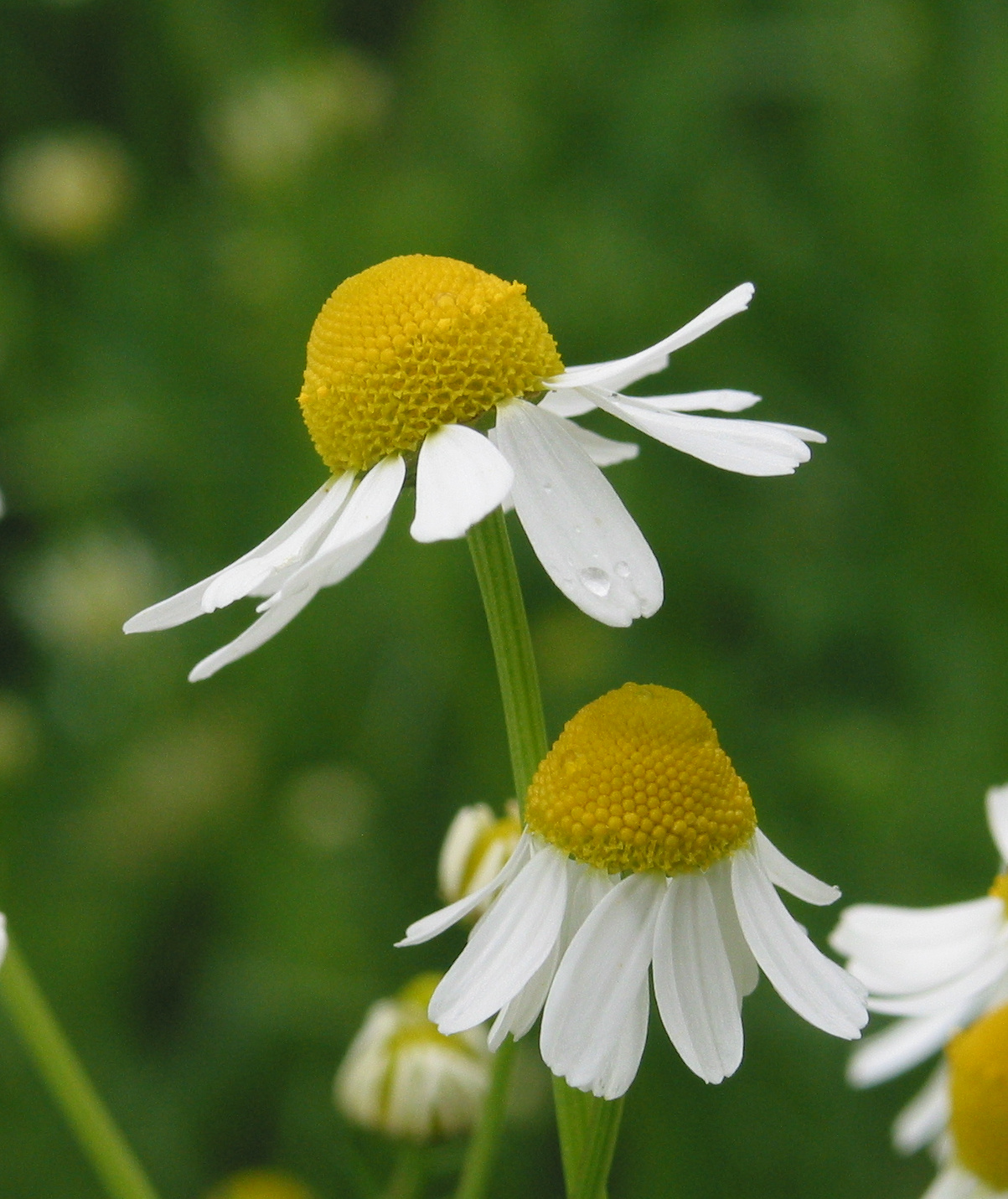

Sleep
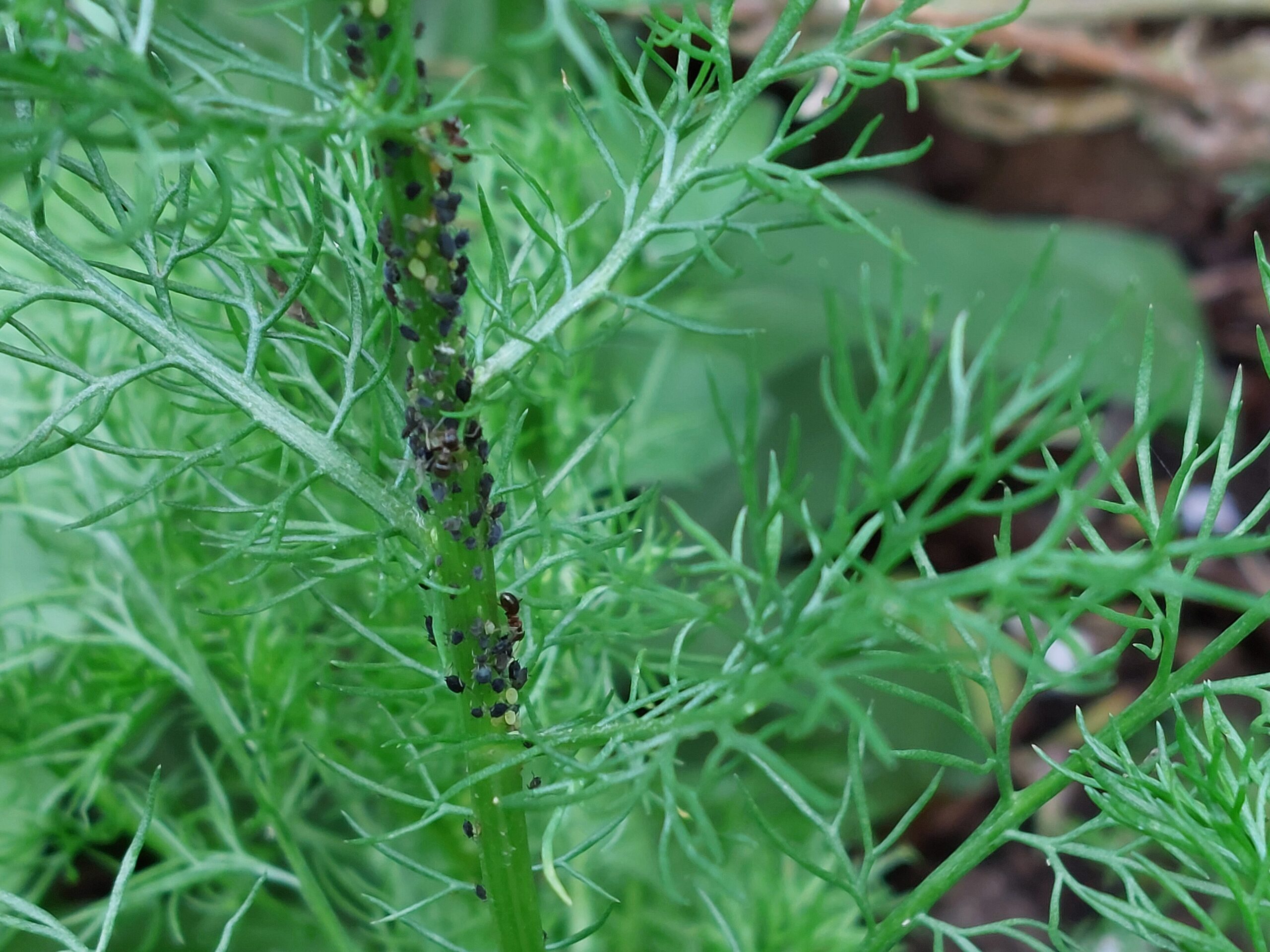
_mit_Blattlausbefall-2-Josef_Schlaghecken.jpg)
A 2016 RCT in postnatal women found 2-week chamomile tea consumption significantly improved sleep quality and reduced symptoms of depression. Earlier work in elderly patients showed benefits from chamomile extract at bedtime. The sleep effects are likely mediated through the same apigenin/GABA-A pathway as the anxiety effects, which makes sense — anxiety and insomnia are frequently the same underlying dysregulation.
Digestive complaints
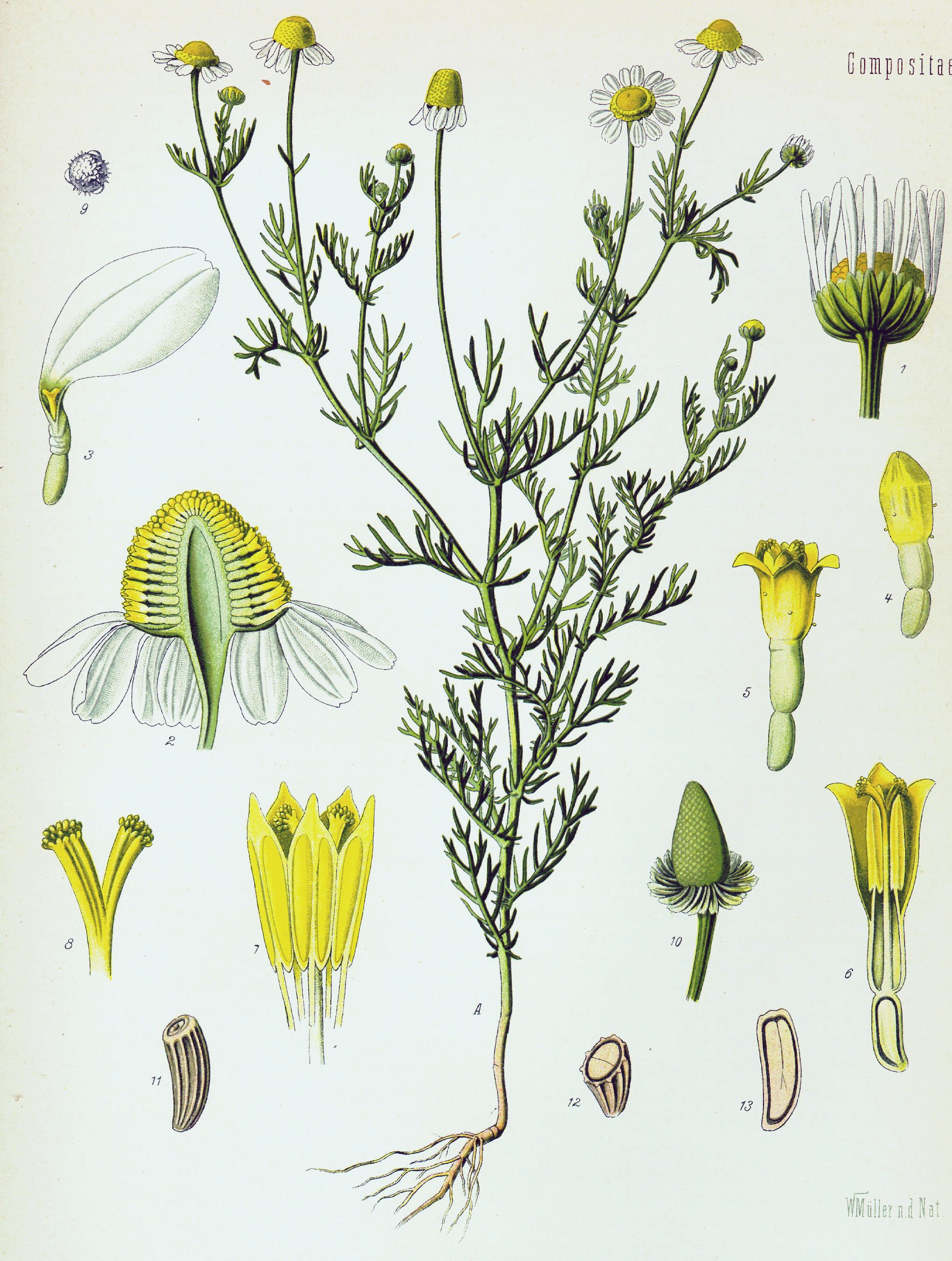

Chamomile has centuries of traditional use for digestive upset, and the modern research supports some of it. It shows antispasmodic activity on intestinal smooth muscle in animal studies and has been used in infants for colic (with caution) and in adults for functional dyspepsia. The effect is modest but real.
Topical skin use

Chamomile preparations have been studied for minor wound healing, eczema, and inflammatory skin conditions with generally positive results, primarily from the bisabolol and chamazulene content. A compress of strong chamomile tea is a traditional remedy for mildly irritated skin, tired eyes, and minor burns.
How to Use Chamomile

Tea (the classic preparation)

For therapeutic use — not just flavor — chamomile needs to be prepared correctly. This is how:
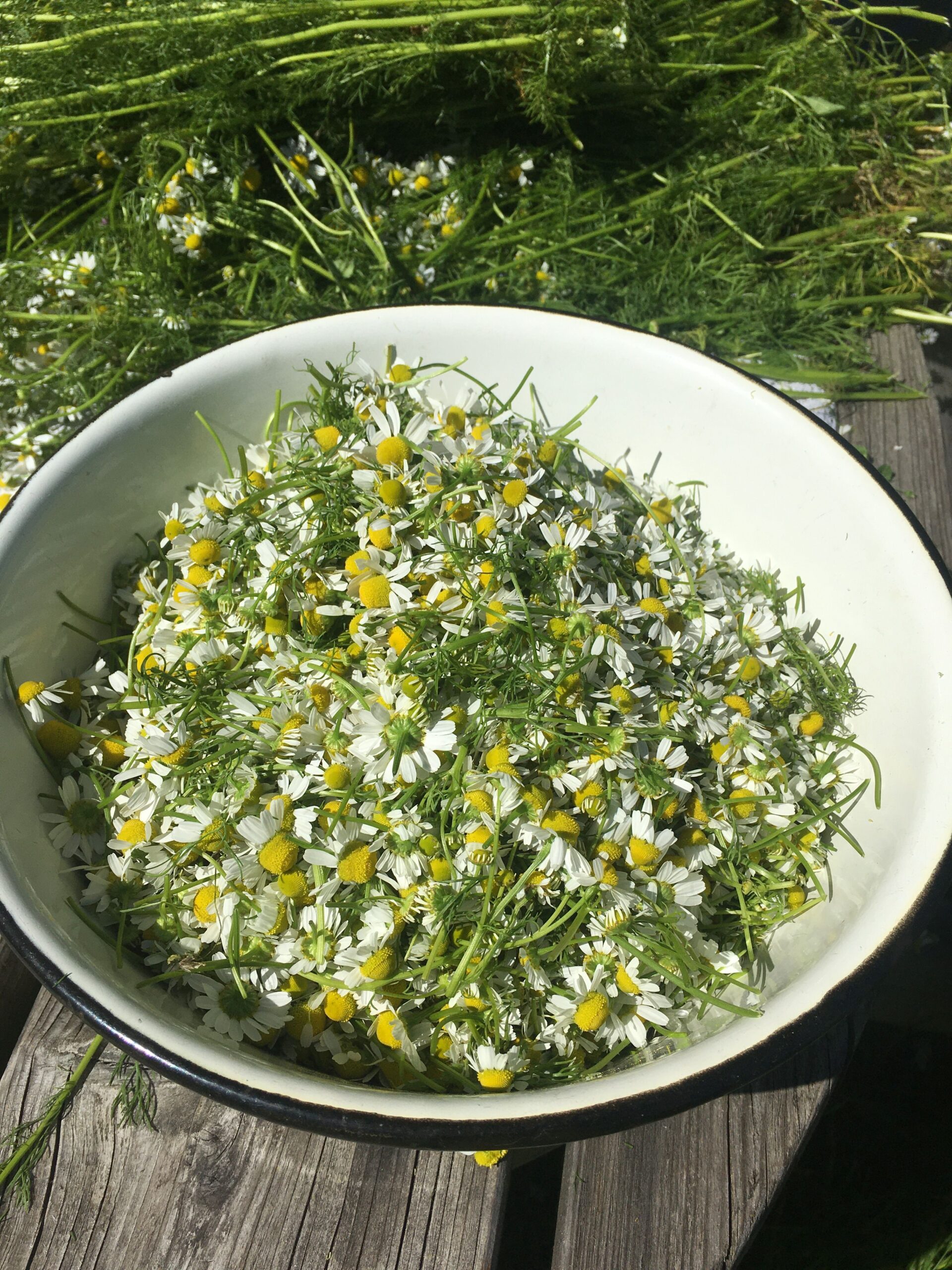
- Use 2–3 grams of dried chamomile flowers per cup (about 1 heaping tablespoon of whole flowers).
- Pour hot, not boiling, water over the flowers — around 90°C / 195°F.
- Cover the cup or teapot while steeping. This matters: the volatile oils (including chamazulene precursors) escape with the steam if you don’t cover it.
- Steep for 5–10 minutes, no less. Grocery-store bagged chamomile tea is often undersized and understeeped.
- Drink 1–3 cups per day for mild anxiety or sleep support.
Tincture

A 1:5 chamomile tincture in 40% alcohol captures the full spectrum of water-soluble and alcohol-soluble compounds. Typical dose is 2–4 mL (about a half teaspoon), 2–3 times per day. See our tincture guide for the method.
Standardized extract capsules
For GAD-level use, the Amsterdam trials used 500 mg capsules of standardized extract, three times daily (1500 mg/day total). If you want to replicate what the research actually supports, this is the dose.
Topical compress
Brew a strong chamomile tea (double strength), let it cool to skin temperature, and soak a clean cloth. Apply to irritated skin, minor burns, or tired eyes for 10–15 minutes.
Growing Chamomile
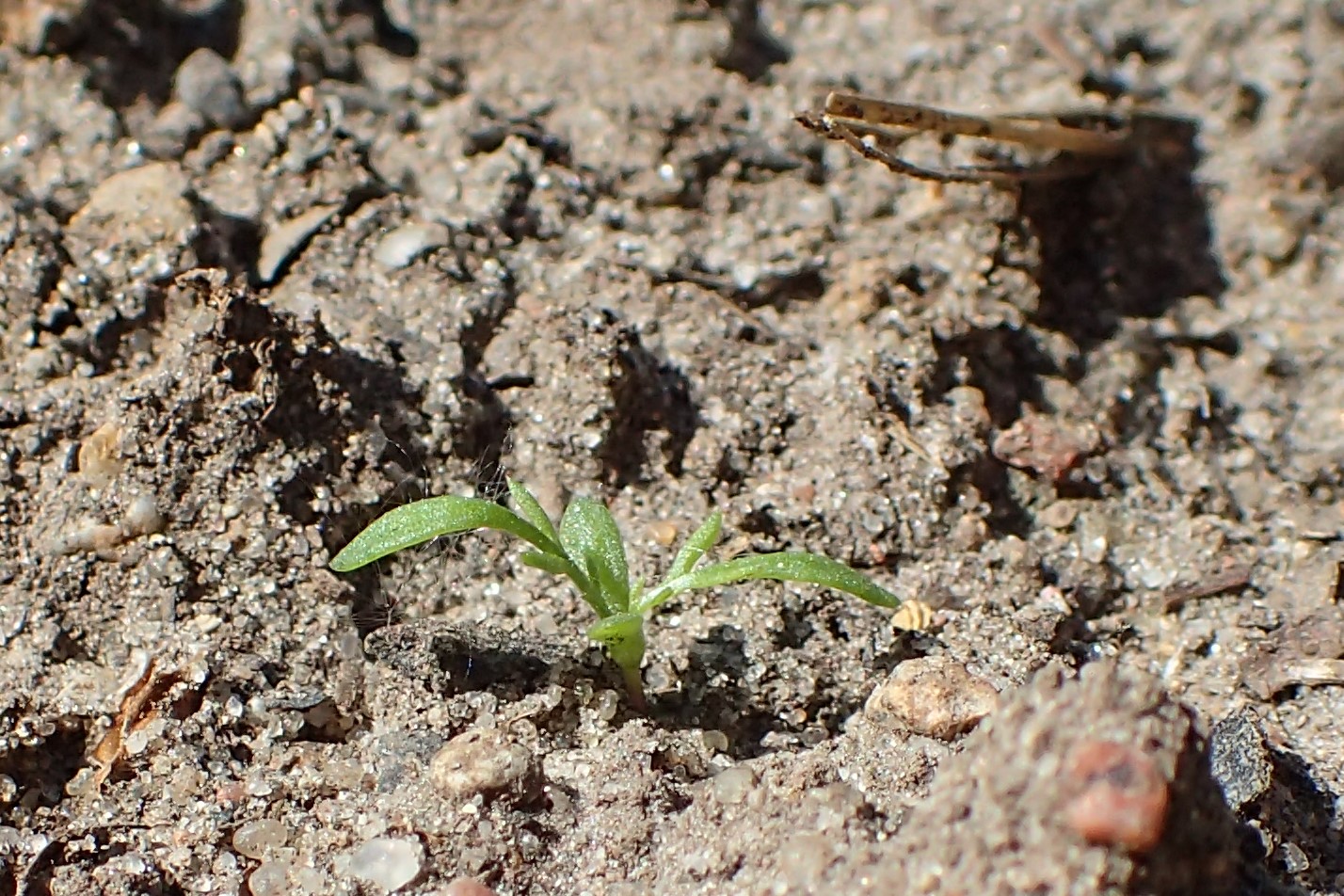
German chamomile is one of the easiest medicinal herbs to grow. It’s an annual, self-seeds readily, thrives in full sun with average soil, and tolerates drought once established. Sow seeds directly in spring after frost danger has passed — no transplanting needed. Harvest flowers when the white petals are fully reflexed (bent backward) and the yellow centers are raised; this is when bisabolol and other actives are highest. Dry whole flowers in a single layer out of direct sun, then store in airtight jars away from light. See our medicinal herbs for beginners guide for a fuller growing walkthrough.
Safety and Interactions
Chamomile has an excellent safety profile at food, tea, and typical supplement doses. Two cautions matter:
Ragweed allergy. Chamomile is in the Asteraceae (daisy) family, as are ragweed, arnica, echinacea, feverfew, and many other herbs. People with severe ragweed allergy may cross-react to chamomile. The risk is rare at tea doses but real enough that if you have a history of serious Asteraceae allergy, it’s worth trying a small amount first or avoiding chamomile entirely.
Anticoagulants. Chamomile has mild anticoagulant activity. Combining it with warfarin has been associated with increased bleeding in case reports. If you take warfarin, a DOAC, or clopidogrel, discuss chamomile use with your prescriber before adding medicinal-dose preparations.
Pregnancy: Chamomile tea at normal dietary doses is generally considered safe in pregnancy, though high medicinal doses should be avoided. Essential oil is not for internal use during pregnancy.
Safety Profile: Chamomile (Matricaria chamomilla)
- Contraindications
- Known allergy to Asteraceae (daisy) family plants, including ragweed, arnica, echinacea, and feverfew — approximately 5–10% of ragweed-allergic individuals cross-react to chamomile. Active bleeding disorders or severe coagulopathy are a relative contraindication given chamomile’s mild anticoagulant activity via coumarin constituents.
- Drug interactions
- Warfarin and other anticoagulants (DOACs, clopidogrel): chamomile’s coumarin content and antiplatelet activity may potentiate bleeding risk; clinical case reports of increased INR have been documented. Sedatives and benzodiazepines: additive CNS depression (apigenin acts on the GABA-A benzodiazepine site). CYP1A2 substrates: theoretical inhibition at high doses; clinical significance at tea doses is low but relevant for sensitive medications.
- Pregnancy / lactation
- Chamomile tea at normal dietary doses (1–2 cups/day) is generally considered safe during pregnancy and is not on the contraindicated herb list; however, multiple strong infusions daily (medicinal-dose use) have traditionally been avoided due to mild uterine-stimulant activity — consult your healthcare provider before regular medicinal-dose use. Internal use of chamomile essential oil is contraindicated during pregnancy. Chamomile tea is widely used during lactation and is not known to be harmful, though data are limited; food-amount doses are generally accepted.
- Maximum recommended daily dose
- Standardized extract: 220–1,100 mg/day (Amsterdam et al. 2009 RCT used 1,500 mg/day of standardized extract; this is the upper research reference point). Tea: up to 3–4 cups/day using 2–3 g dried flowers per cup, covered and steeped 5–10 minutes.
- Do not use if
-
- You have a confirmed or suspected Asteraceae family allergy (ragweed, arnica, echinacea, chrysanthemum)
- You are taking warfarin, a DOAC (apixaban, rivaroxaban), or antiplatelet drugs without clinician sign-off
- You are scheduled for surgery within 2 weeks (discontinue medicinal-dose preparations)
- You are under 6 months of age (chamomile tea is not appropriate for very young infants)
Frequently Asked Questions
Does chamomile really work for anxiety, or is it just a placebo?
Based on the Amsterdam 2009 RCT and the 2012 follow-up, the evidence supports a real, modest anxiolytic effect in people with mild-to-moderate generalized anxiety disorder. It is not equivalent to prescription anti-anxiety medication, but it is also not placebo. The apigenin / GABA-A mechanism provides a plausible biological explanation. For clinical anxiety, chamomile should complement, not replace, professional care.
How much chamomile should I drink?
For general relaxation or mild sleep support, 1–3 cups of properly prepared tea (2–3 g of flowers per cup, covered, steeped 5–10 min) per day is a reasonable range. For GAD-level use, the clinical research used 1500 mg/day of standardized extract capsules, which delivers more concentrated actives than you can easily get from tea.
Is it safe to drink chamomile every day?
For most people, yes. Chamomile is one of the safest medicinal herbs for daily long-term use. The main exception is people with Asteraceae allergies or on anticoagulant therapy.
The Bottom Line
Chamomile is the rare traditional herb where the modern research actually backs the traditional use — not as a panacea, not as a replacement for professional care, but as a real, evidence-supported option for mild-to-moderate anxiety and sleep difficulty. The Amsterdam RCTs are some of the best clinical data we have for any botanical anxiolytic.
For general use, 2–3 grams of dried German chamomile flowers, covered, steeped 5–10 minutes, 1–3 times a day, is a sensible protocol. For people with significant anxiety who want to try chamomile at the dose the research supports, 1500 mg/day of standardized extract is the reference point — and a conversation with your clinician is always a reasonable first step.
See also: best herbs for sleep, 10 medicinal herbs every beginner should grow.
References
- Amsterdam JD, Li Y, Soeller I, et al. “A randomized, double-blind, placebo-controlled trial of oral Matricaria recutita (Chamomile) extract therapy for generalized anxiety disorder.” J Clin Psychopharmacol. 2009;29:378–382. PMC2995283
- Amsterdam JD, Shults J, Soeller I, et al. “Chamomile (Matricaria recutita) may provide antidepressant activity in anxious, depressed humans.” Altern Ther Health Med. 2012;18:44–49.
- Srivastava JK, Shankar E, Gupta S. “Chamomile: A herbal medicine of the past with bright future.” Mol Med Report. 2010;3(6):895–901.