If you’ve ever stared at the ceiling at 2 a.m., you’re not alone. The CDC estimates that roughly one in three American adults doesn’t get enough sleep (CDC, 2022). And while prescription sleep medications work, they come with well-documented side effects: dependency risk, morning grogginess, and rebound insomnia among them.
So it’s no surprise that more people are turning to herbs for sleep. But which ones actually have research behind them, and which are mostly folklore? I dug into the clinical literature on eight popular herbal sleep aids to find out. Some have surprisingly solid evidence. Others are more promising than proven. Here’s what the science actually says.
Key Takeaways
- Valerian root is the most-studied herbal sleep aid, with meta-analyses showing modest improvements in subjective sleep quality
- Passionflower performed comparably to a prescription sedative in one clinical trial, with fewer side effects
- Lavender (oral Silexan) has some of the strongest clinical evidence, particularly for anxiety-related sleep issues
- Most herbal sleep aids work best for mild sleep difficulties — they are not replacements for treating underlying sleep disorders
- Combining herbs (chamomile + passionflower + lemon balm) may be more effective than single herbs alone
The 8 Best Herbs for Sleep, Ranked by Evidence
Not all herbal sleep aids are created equal. Below, I’ve organized these eight herbs roughly by the strength and volume of their clinical evidence, though I should note that even the best-studied herbs here have far less research behind them than pharmaceutical sleep aids.
1. Valerian Root (Valeriana officinalis)
Valerian is the most extensively studied herbal sleep aid in Western medicine. The root contains valerenic acid, which appears to inhibit the breakdown of GABA, the neurotransmitter that calms neural activity and helps you wind down.
A 2006 meta-analysis of 16 randomized controlled trials found that valerian may improve subjective sleep quality without producing significant side effects (Bent et al., Am J Med, 2006). A more recent 2020 systematic review of 60 studies confirmed modest benefits for sleep quality, particularly in populations with self-reported insomnia, though the authors noted that study quality was often low (Shinjyo et al., J Evid Based Integr Med, 2020).
How to use it: 300–600 mg of a standardized root extract, taken 30–60 minutes before bed. Valerian works best with consistent use over 2–4 weeks rather than as a one-night fix. Fair warning: it smells terrible. Capsules are the way to go unless you enjoy the aroma of old gym socks.
If you prefer to make your own preparation, our complete guide to making herbal tinctures walks you through the process step by step.

2. Lavender (Lavandula angustifolia)

Lavender’s reputation as a calming herb is ancient, but the modern research is actually quite compelling, particularly for the oral supplement Silexan (marketed as Lavela WS 1265 in some countries).
A 2019 meta-analysis of 11 RCTs found that lavender aromatherapy significantly improved sleep quality as measured by the Pittsburgh Sleep Quality Index (Kaiyo et al., J Altern Complement Med, 2019). The oral supplement Silexan (80 mg/day) has been studied in multiple trials for anxiety, with secondary sleep outcomes showing meaningful improvement. A 2014 RCT found Silexan comparable to lorazepam (a benzodiazepine) for generalized anxiety and associated sleep disturbance (Kasper et al., Int J Neuropsychopharmacol, 2014).
How to use it: 80 mg oral Silexan supplement daily, or diffuse lavender essential oil in the bedroom 30 minutes before sleep. Do not ingest essential oils directly. Oral lavender supplements use a specially prepared form. For aromatherapy, 3–5 drops in a diffuser is sufficient.
3. Passionflower (Passiflora incarnata)

Passionflower is one of my personal favorites for evening tea because it’s gentle, pleasant-tasting, and has a mechanism that makes pharmacological sense. The flavonoids in passionflower, particularly chrysin, appear to bind GABA-A receptors and increase overall GABA levels in the brain.
The most notable clinical trial is a 2001 double-blind study that compared passionflower extract to oxazepam (a benzodiazepine) in 36 patients with generalized anxiety. Passionflower performed comparably for reducing anxiety and improving sleep quality, but with significantly fewer side effects, particularly less daytime drowsiness (Akhondzadeh et al., J Clin Pharm Ther, 2001). A 2011 RCT found that passionflower tea (one cup before bed for seven days) improved subjective sleep quality versus placebo (Ngan & Conduit, Phytother Res, 2011).
How to use it: 1–2 cups of passionflower tea in the evening, or 250–500 mg extract 30 minutes before bed. Tinctures are also effective. See our tincture-making guide for instructions.
4. Ashwagandha (Withania somnifera)
The species name somnifera literally means “sleep-inducing,” and ashwagandha has been used in Ayurvedic medicine for centuries as a sleep aid. Modern research suggests it works primarily by reducing cortisol and anxiety rather than through direct sedation.
A 2019 double-blind RCT of 60 participants found that 300 mg of ashwagandha root extract twice daily significantly improved sleep quality and sleep onset latency compared to placebo, as measured by actigraphy (wrist-worn sleep tracking) and the Pittsburgh Sleep Quality Index (Langade et al., Cureus, 2019). A 2021 systematic review of five RCTs confirmed a small but significant benefit for sleep, particularly in participants who also had anxiety (Cheah et al., PLoS One, 2021).
How to use it: 300–600 mg of a standardized root extract (look for KSM-66 or Sensoril extracts, which are the most studied). Take in the evening, with or without food. Effects typically build over 2–6 weeks.

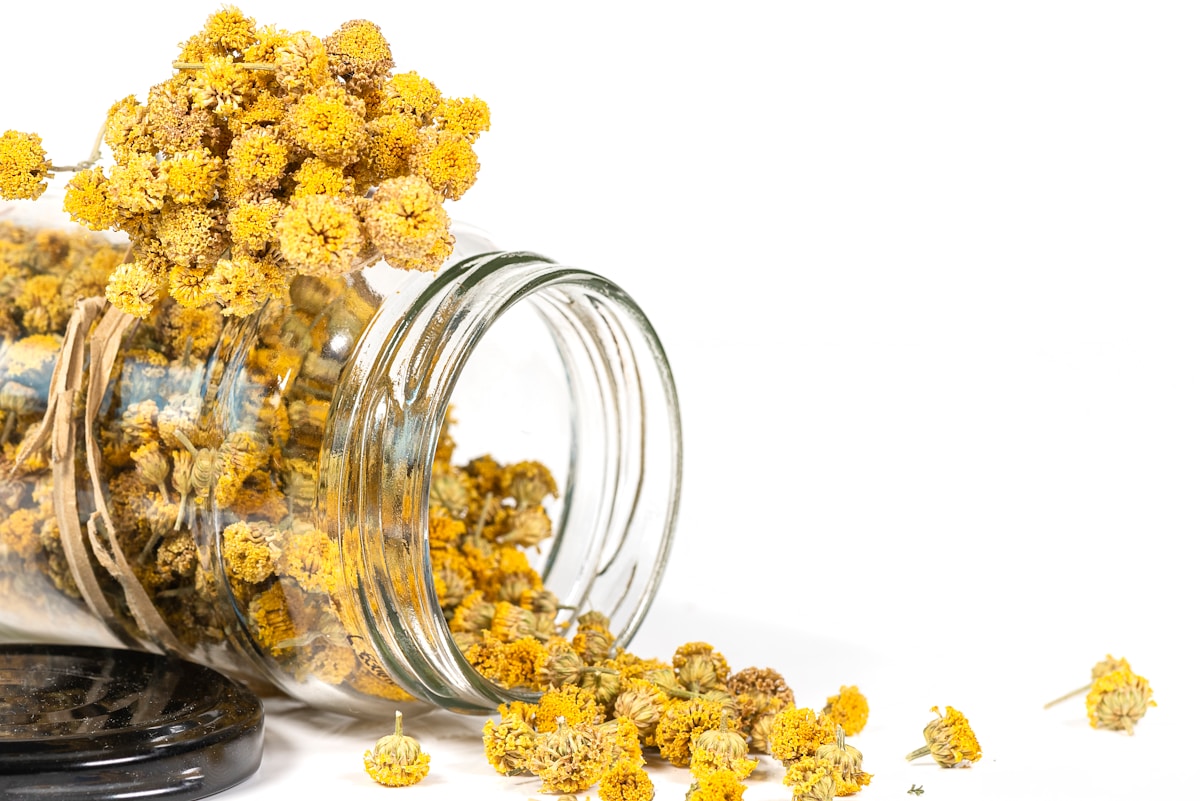
5. Chamomile (Matricaria chamomilla)

Chamomile is probably the most widely consumed herbal sleep aid in the world, even if most people drinking it don’t think of it that way. The key compound is apigenin, a flavonoid that binds to benzodiazepine receptors on GABA-A (the same receptors targeted by drugs like Valium), though far more gently.
A 2016 RCT of 40 postnatal women found that chamomile tea consumption for two weeks significantly improved sleep quality and depressive symptoms compared to the control group (Chang & Chen, J Adv Nurs, 2016). A 2019 study of 60 elderly participants found that 200 mg chamomile extract twice daily improved sleep quality (Adib-Hajbaghery & Mousavi, Complement Ther Clin Pract, 2017).
I’ll be honest: the individual studies on chamomile are often small and not always well-designed. The evidence is modest. But chamomile is extremely safe, pleasant to drink, and inexpensive — which is why it remains a staple. It is also one of the easiest medicinal plants to grow at home, as we cover in our guide to 10 medicinal herbs every beginner should grow.
How to use it: 1–2 cups of chamomile tea in the evening (steep for 5–10 minutes with a lid to keep volatile oils in), or 200–270 mg chamomile extract in capsule form.
6. Lemon Balm (Melissa officinalis)

Lemon balm has been used in European herbal medicine since at least the Middle Ages, and it’s a lovely, lemony herb that grows readily in most gardens. Its primary mechanism appears to involve inhibiting GABA transaminase, the enzyme that breaks down GABA, thereby increasing GABA availability.
A 2011 study found that 600 mg of lemon balm extract improved mood and calmness, with secondary improvements in self-reported sleep (Kennedy et al., Pharmacol Biochem Behav, 2003). The combination of lemon balm and valerian has been studied more extensively: a 2006 multicenter study of 918 children found that the combination significantly improved insomnia symptoms in 81% of participants, with very good tolerability (Muller & Klement, Phytomedicine, 2006).
The honest assessment: lemon balm on its own has limited sleep-specific evidence. It shines brightest as a synergistic partner with other herbs, especially valerian.
How to use it: 300–600 mg extract, or a generous handful of fresh or dried leaves in tea. Combines beautifully with chamomile. Often available as a tincture as well.
7. Reishi Mushroom (Ganoderma lucidum)

Reishi is traditionally known as the “mushroom of immortality” in Chinese medicine, and it’s been used for calming the spirit (an-shen) for over 2,000 years. Modern research is starting to reveal why it might actually work for sleep.
A 2021 study published in Nature subsidiary journals identified a novel mechanism: ganoderic acids in reishi appear to modulate the gut-serotonin pathway, reducing sleep latency (the time it takes to fall asleep) in animal models. The researchers found that reishi extract altered gut microbiota composition, increasing serotonin precursors that cross the blood-brain barrier and promote melatonin synthesis (Yao et al., Pharmacol Res, 2021). An earlier 2012 study in rats found that reishi extract significantly increased total sleep time and non-REM sleep (Cui et al., BMC Complement Altern Med, 2012).
The caveat: most reishi sleep research is preclinical (animal studies). We need more human trials. But the traditional use is extensive, and the emerging mechanism via the gut-serotonin axis is compelling. For a deep dive on this mushroom, see our full guide on reishi mushroom benefits and research.
How to use it: 1,000–2,000 mg of reishi fruiting body extract daily (≤2 g/day extract ceiling), or as a tea/decoction. Reishi is bitter, so capsules or a blended mushroom coffee work well. You can compare reishi to other functional mushrooms in our functional mushroom comparison guide.
8. Magnolia Bark (Honokiol)

Magnolia bark has been used in traditional Chinese medicine (as Houpo) and traditional Japanese medicine (as Kampo) for centuries. The active compound honokiol is a potent binder of GABA-A receptors, and unlike many herbal compounds, this mechanism has been well-characterized in laboratory studies.
A 2012 study in Neuropharmacology demonstrated that honokiol acts as a positive allosteric modulator of GABA-A receptors, enhancing the effect of GABA without directly activating the receptor. Similar in mechanism (though weaker in potency) to benzodiazepines (Bernaskova et al., Eur J Pharmacol, 2015). A 2021 trial of perimenopausal women found that magnolia bark extract (60 mg/day) improved sleep quality over 24 weeks (Mucci et al., Minerva Ginecol, 2006).
This is another herb where the pharmacological mechanism is clearer than the clinical evidence. We need larger human sleep trials, but the GABA-A binding data is encouraging.
How to use it: 200–400 mg of magnolia bark extract standardized to honokiol content, taken 30–60 minutes before bed.
Comparison Table: 8 Herbs for Sleep at a Glance

| Herb | Evidence Strength | Best Form | Typical Dose | Onset |
|---|---|---|---|---|
| Valerian Root | Strong (meta-analyses) | Capsule or tincture | 300–600 mg | 2–4 weeks for full effect |
| Lavender | Strong (RCTs) | Oral (Silexan) or diffuser | 80 mg oral / 3–5 drops diffused | Same night (aroma); 1–2 weeks (oral) |
| Passionflower | Moderate (small RCTs) | Tea or tincture | 250–500 mg extract | Same night to 1 week |
| Ashwagandha | Moderate (RCTs) | Capsule (KSM-66) | 300–600 mg | 2–6 weeks |
| Chamomile | Moderate (small RCTs) | Tea or extract | 1–2 cups tea / 200–270 mg extract | Same night |
| Lemon Balm | Limited (often combined) | Tea or tincture | 300–600 mg | Same night |
| Reishi Mushroom | Emerging (mostly preclinical) | Capsule or extract | 1,000–2,000 mg extract (≤2 g/day ceiling) | 2–4 weeks |
| Magnolia Bark | Emerging (mechanism clear, few RCTs) | Capsule | 200–400 mg | 30–60 minutes |
How to Build a Sleep Tea Blend

One of the most enjoyable ways to use herbs for sleep is to make your own evening tea blend. Combining multiple herbs may be more effective than any single herb alone, and the ritual of making tea itself signals to your body that it’s time to wind down.
Here’s a blend I’ve been making for the past year that combines four of the herbs above. It tastes good (this matters; you won’t stick with something that tastes like compost) and covers multiple pathways: GABA modulation, mild sedation, and anxiolytic effects.
Evening Calm Sleep Tea
- 2 parts dried chamomile flowers: the base, provides gentle sedation via apigenin
- 1 part dried passionflower: GABA support, adds depth to the flavor
- 1 part dried lemon balm leaves: calming, adds a bright lemony note
- 1/2 part dried lavender buds: aromatic and relaxing (go easy; too much tastes soapy)
To prepare: Combine dried herbs in a jar and shake well. Use 1 heaping tablespoon of the blend per 8 oz of just-boiled water. Steep covered for 8–10 minutes (keeping the lid on retains volatile oils). Strain. Add honey if desired. Drink 30–60 minutes before bed.
Batch size example: 1 cup chamomile + 1/2 cup passionflower + 1/2 cup lemon balm + 1/4 cup lavender = enough for roughly 30 servings.
You can adjust the proportions to your taste. Many of these herbs are easy to grow at home — our sister site Wild Hearth Life covers gardening and homesteading if you want to cultivate your own sleep herbs. If you find the blend too floral, reduce the lavender. If you want stronger sedative effects, increase the passionflower. Some people also add a pinch of valerian root, though be warned: it changes the flavor significantly (and not for the better, in my opinion).
Safety and Herb-Drug Interactions

Herbal doesn’t mean harmless. While the herbs on this list have strong safety profiles when used appropriately, there are important interactions and cautions to know about.
Important Safety Considerations
Valerian + sedative medications: Valerian may enhance the effects of benzodiazepines, barbiturates, and other CNS depressants. Do not combine without medical supervision. Also avoid combining with alcohol, as both affect GABA signaling.
Passionflower + blood thinners: Some evidence suggests passionflower may have mild anticoagulant properties. If you take warfarin, heparin, or other blood-thinning medications, consult your doctor before use.
Ashwagandha + thyroid medications: Ashwagandha may increase thyroid hormone levels. If you take levothyroxine or have a thyroid condition, discuss use with your healthcare provider.
Chamomile + blood thinners: Chamomile contains coumarin compounds that may interact with anticoagulant medications. The risk is low at typical tea doses but worth noting.
Lavender (oral) + CYP3A4 drugs: Oral lavender supplements may affect drugs metabolized by the CYP3A4 enzyme pathway. Check with your pharmacist if you take multiple medications.
Pregnancy and breastfeeding: Most of these herbs lack adequate safety data for pregnancy and breastfeeding. Chamomile tea in moderate amounts is generally considered safe, but passionflower, valerian, ashwagandha, and magnolia bark should be avoided during pregnancy. When in doubt, ask your midwife or OB.
A general rule: If you take any prescription medications (especially sedatives, blood thinners, antidepressants, or thyroid medications) talk to your doctor or pharmacist before adding herbal sleep aids. Many of these herbs affect the same neurotransmitter systems that pharmaceutical drugs target.
Safety Profiles: 8 Herbs for Sleep
Review the profile for each herb before use. Consult your healthcare provider if you take prescription medications, are pregnant, or have a medical condition.
| Herb | Contraindications | Drug interactions | Pregnancy / lactation | Max daily dose | Do not use if |
|---|---|---|---|---|---|
| Valerian Root Valeriana officinalis |
Known allergy to valerian. Liver disease (rare hepatotoxicity cases reported at high doses). Avoid concurrent alcohol use. | CNS depressants and sedatives — benzodiazepines, barbiturates, opioids, antihistamines (additive sedation; do not combine without medical supervision). Alcohol — additive CNS depression via shared GABA signaling. | Avoid during pregnancy — insufficient safety data and some alkaloids are theoretically uterotonic. Breastfeeding: precautionary avoidance recommended. | ≤900 mg standardized root extract per day. Typical sleep dose: 300–600 mg 30–60 min before bed. | Prescription sedatives or CNS depressants without medical guidance; alcohol use same evening; liver disease; pregnancy or breastfeeding. |
| Lavender (oral) Lavandula angustifolia |
Known lavender allergy. Oral lavender (Silexan) is a specific pharmaceutical-grade preparation — do not substitute with essential oil taken internally (essential oils are not safe to ingest directly). | CYP3A4 substrates — oral lavender supplements may affect the metabolism of drugs processed by the CYP3A4 enzyme; consult your pharmacist if taking multiple medications. CNS depressants — mild additive sedation possible. | Lavender aromatherapy is generally considered safe during pregnancy. Oral lavender supplement (Silexan) lacks adequate human pregnancy safety data — avoid oral supplemental doses during pregnancy and breastfeeding. | Oral Silexan: 80 mg/day standardized preparation. Aromatherapy: 3–5 drops in a diffuser — no dose ceiling applies to inhalation use. | Oral ingestion of lavender essential oil (not the same as pharmaceutical Silexan); pregnancy or breastfeeding (oral supplement); taking CYP3A4-sensitive medications without pharmacist review. |
| Passionflower Passiflora incarnata |
Known allergy to passionflower. May cause sedation — avoid operating heavy machinery after use. Avoid combining with high-dose valerian or prescription sedatives. | Anticoagulants and antiplatelets — some evidence of mild anticoagulant properties; consult doctor if taking warfarin, DOACs, or aspirin. CNS depressants — additive sedation with benzodiazepines, barbiturates, and alcohol. MAO inhibitors — theoretical interaction; avoid concurrent use. | Avoid during pregnancy — passionflower has been traditionally classified as a uterine stimulant and may increase risk of miscarriage. Breastfeeding: insufficient safety data; avoid medicinal doses. | ≤500 mg extract per day, or 1–2 cups of passionflower tea. Clinical studies used up to 500 mg extract. | Pregnancy or breastfeeding; anticoagulant or antiplatelet medications without medical guidance; MAO inhibitors; prescription sedatives or alcohol (same session); operating heavy machinery. |
| Ashwagandha Withania somnifera |
Autoimmune conditions — lupus, rheumatoid arthritis, Hashimoto’s thyroiditis, MS (immune-modulating activity may worsen autoimmune disease). Thyroid disorders — ashwagandha may increase thyroid hormone levels. Hormone-sensitive conditions (theoretical androgenic activity). | Thyroid medications (levothyroxine) — ashwagandha may raise thyroid hormone levels, potentially requiring dose adjustment. Immunosuppressants — opposing immune activity. Sedatives and CNS depressants — potential additive sedation. Diabetes medications — may enhance blood-glucose lowering. | Avoid during pregnancy — high doses of ashwagandha root are traditionally classified as abortifacient and are on the Tier B hard-contraindication list for pregnancy. Breastfeeding: insufficient safety data; avoid medicinal doses. | ≤600 mg standardized root extract per day (KSM-66 or Sensoril; these are the best-studied forms). | Pregnancy or breastfeeding; autoimmune disease (unless clinician-approved); thyroid condition or thyroid medications without monitoring; scheduled surgery within 2 weeks (theoretical hormonal effects). |
| Chamomile Matricaria chamomilla |
Allergy to plants in the Asteraceae/Compositae family (ragweed, chrysanthemum, marigold, daisy) — cross-reactivity is possible. Avoid if you have known chamomile allergy. | Anticoagulants and antiplatelets — chamomile contains coumarin compounds that may have mild anticoagulant activity; theoretical interaction with warfarin at high doses (low risk at typical 1–2 cup tea doses). Sedatives — mild additive sedation possible. | Chamomile tea in moderate amounts (1–2 cups/day) is generally considered safe during pregnancy and is one of the few herbs on this list with a relatively favorable pregnancy safety profile. Avoid concentrated extract supplements during pregnancy — higher-dose preparations lack adequate safety data. | 1–2 cups of chamomile tea per evening (standard brew); or ≤1,100 mg extract per day in supplement form. | Asteraceae family allergy; anticoagulant medications at high chamomile supplement doses; concentrated extract supplements during pregnancy (moderate tea use is generally acceptable). |
| Lemon Balm Melissa officinalis |
Thyroid disease — lemon balm may inhibit TSH and reduce thyroid hormone production; use with caution or avoid if you have hypothyroidism. Avoid in combination with sedative medications. | Sedatives and CNS depressants — additive sedation (benzodiazepines, barbiturates). Thyroid medications — lemon balm may interfere with levothyroxine efficacy by reducing TSH activity. GABA-modulating drugs — theoretical additive effects. | Generally considered safe for occasional tea use during pregnancy in culinary amounts. Concentrated extract supplements have insufficient pregnancy safety data — avoid medicinal-dose supplements during pregnancy and breastfeeding. | ≤600 mg extract per day, or 2–3 cups of fresh/dried lemon balm tea. | Hypothyroidism or thyroid medications (without clinician guidance); prescription sedatives or CNS depressants without medical supervision; high-dose supplements during pregnancy. |
| Reishi Mushroom Ganoderma lucidum |
Bleeding disorders; autoimmune disease; scheduled surgery within 2 weeks; organ transplant recipients on immunosuppressants; hypotension. | Anticoagulants / antiplatelets — additive bleeding risk. Antihypertensives — additive blood pressure lowering. Immunosuppressants — opposing immunomodulatory mechanism. Diabetes medications / insulin — may enhance blood-glucose lowering. Chemotherapy — coordinate with oncologist. | Avoid medicinal doses during pregnancy and breastfeeding. No human safety data; antiplatelet and immune-modulating activity undesirable during gestation. | ≤2 g/day (2,000 mg) concentrated fruiting body extract. Traditional decoction of dried slices: 3–9 g/day — not equivalent to extract dosing. | Bleeding disorder or anticoagulant use; surgery within 2 weeks; autoimmune disease (unless cleared); organ transplant; pregnancy or breastfeeding; low blood pressure or antihypertensive medications. |
| Magnolia Bark (Honokiol) Magnolia officinalis |
Known allergy to Magnolia species. May cause sedation — avoid operating machinery. Theoretical hormonal activity — use with caution if you have hormone-sensitive conditions. | CNS depressants and sedatives — additive sedation via GABA-A receptor modulation (benzodiazepines, barbiturates, alcohol, other herbal sedatives). Anticoagulants — honokiol has shown antiplatelet properties in vitro; theoretical interaction with warfarin and other blood thinners. | Avoid during pregnancy — magnolia bark is traditionally considered a uterine stimulant and lacks adequate human pregnancy safety data. Breastfeeding: precautionary avoidance recommended. | ≤400 mg of honokiol-standardized magnolia bark extract per day, taken 30–60 minutes before bed. | Pregnancy or breastfeeding; prescription sedatives or CNS depressants without medical guidance; anticoagulant medications (without clinician awareness); operating heavy machinery after use. |
The Bottom Line on Herbs for Sleep

Here’s what I tell people who ask me which herbs for sleep actually work: start with chamomile tea, because it’s safe, cheap, and pleasant. If you want something stronger, add passionflower and lemon balm to your evening tea. If you’re dealing with anxiety-related sleep issues, consider ashwagandha or oral lavender (Silexan) with your healthcare provider’s knowledge. And if you want the most research-backed option, valerian root (despite the smell) has the most data behind it.
What I don’t recommend: expecting any herb to be a magic bullet. Good sleep starts with the basics: consistent schedule, dark room, no screens before bed, limited caffeine after noon. Herbs can meaningfully support that foundation. They’re unlikely to override bad habits.
If your sleep issues are more about a racing mind than physical restlessness, you might also explore lion’s mane mushroom for cognitive support during the day, which some users find helps with overall mental calm. And if you’ve been struggling with sleep for more than a few weeks, please see a healthcare provider. Chronic insomnia can have underlying causes (sleep apnea, hormonal changes, medication side effects) that no amount of chamomile tea will fix.
Frequently Asked Questions
What is the strongest herb for sleep?

Based on current evidence, valerian root has the most research behind it, with multiple meta-analyses supporting modest improvements in sleep quality. However, “strongest” depends on the individual. Some people respond better to passionflower or lavender. Oral lavender (Silexan) also has strong clinical trial data, particularly for sleep disrupted by anxiety. No single herb works for everyone, and combining herbs (like our sleep tea blend above) may be more effective than relying on one alone.
Can I take multiple sleep herbs together?

Yes, in most cases combining sleep herbs is safe and may even be beneficial. The combination of valerian and lemon balm has been specifically studied and found effective. Our sleep tea blend (chamomile + passionflower + lemon balm + lavender) combines herbs with different mechanisms of action. That said, combining multiple herbal supplements in capsule form can make it harder to identify what’s working (or causing side effects). Start with one or two herbs and add gradually. And do not combine herbal sleep aids with prescription sedatives without medical guidance.
How long do herbal sleep aids take to work?

It varies by herb. Chamomile tea and passionflower can have noticeable calming effects the same evening. Lavender aromatherapy also works relatively quickly. On the other hand, valerian root typically takes 2–4 weeks of consistent use before its full effects are felt, so don’t give up after one night. Ashwagandha, as an adaptogen that works through stress reduction, may take 2–6 weeks. Reishi mushroom similarly requires consistent daily use. See the comparison table above for specific onset times.
Are herbs for sleep safe to use every night?

Most of the herbs discussed here have good safety profiles for nightly use in published studies lasting 4–8 weeks. Chamomile, lemon balm, and lavender aromatherapy are particularly well-tolerated for regular use. Valerian has been studied for up to 28 days without significant adverse effects. However, long-term studies (6+ months) are limited for most herbal sleep aids. A reasonable approach: use them nightly for a few weeks to establish better sleep patterns, then taper to as-needed use. If you find you can’t sleep at all without them, that’s worth discussing with a healthcare provider.